








“What does successful PBL implementation actually look like in practice?”
As district and school leaders, we often find ourselves caught between the theory of Gold Standard PBL and the reality of the classroom. We know the "why," but the "how" can feel elusive. Scaling this work isn’t about “doing more projects”; it’s about a fundamental leadership shift: moving from private practice to a culture of collective learning. It’s about having a deep understanding of the necessary leadership moves to establish the infrastructure and set the culture so the shift feels like an evolution versus a change of course. To that end, we’ve identified seven “hats” that a leader must wear (sometimes with multiple hats being piled one upon another) to break the process down.
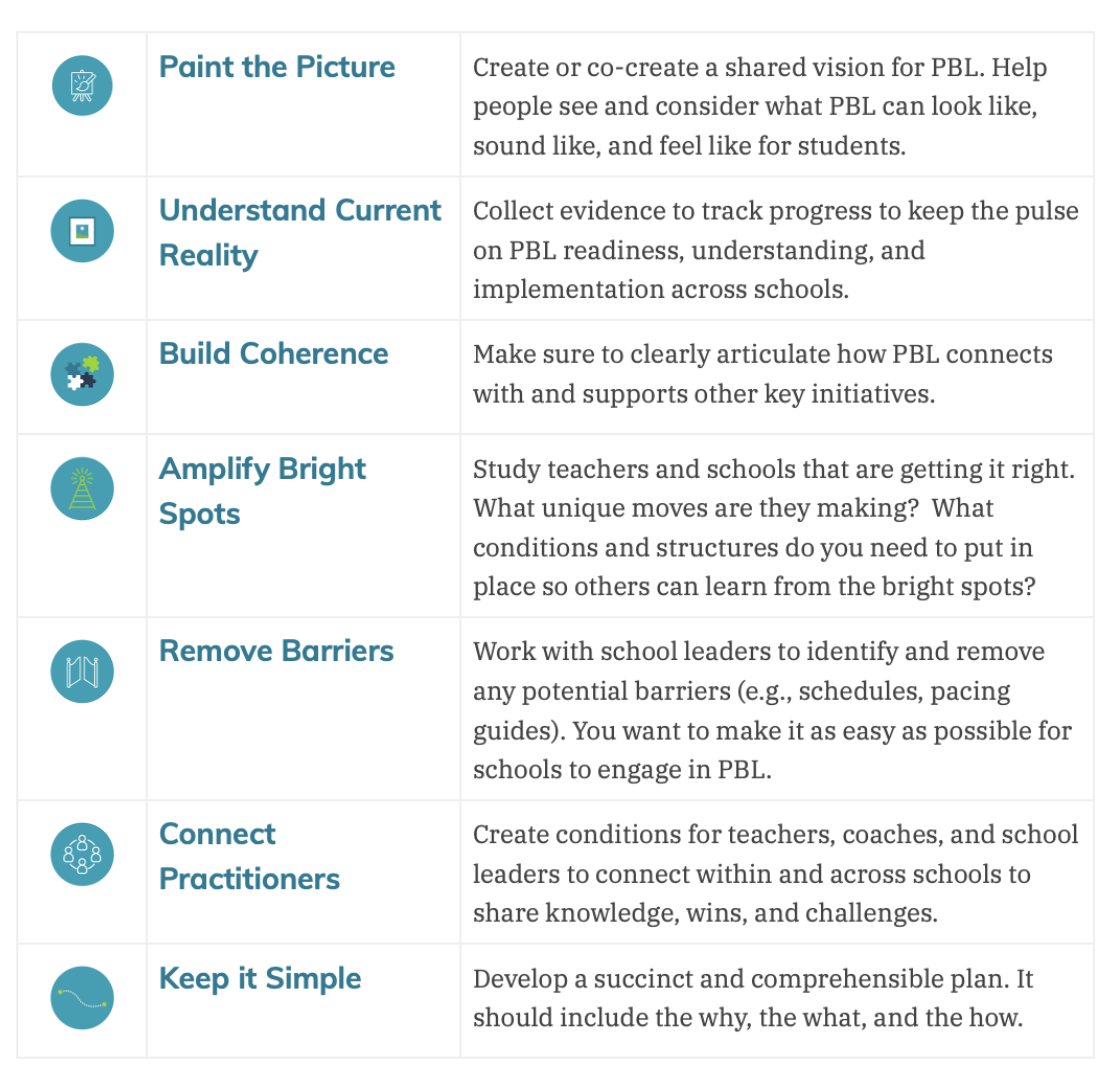
To help leaders bridge this gap, PBLWorks developed the Leadership Lab—an immersive, on-site experience designed to promote reflection and provide an opportunity for leaders to Paint the Picture of what high-quality PBL looks, sounds, and feels like for students. It encourages leaders to deprivatize their practice and name the key moves and conditions for making PBL a reality in their schools.
Deprivatizing Leadership: How Jim Bridger Middle School DID it
At Jim Bridger Middle School, in the Clark County School District in Las Vegas, Principal Ramona Fricker has redefined what it means to lead an instructional shift. Rather than keeping her school’s progress under wraps until it was "perfect," Ramona partnered with PBLWorks to host the inaugural Leadership Lab. She leaned into our structured process for peer observation, opening her doors to fellow leaders to show that PBL is not an "add-on," but the connective tissue across content areas and curriculum, the instructional backdrop of school’s improvement. By doing so, she helped visiting leaders practice a process to better Understand Current Reality—collecting and calibrating on evidence to see exactly where their schools sit on the journey toward readiness and implementation.
Ramona demonstrated that when a leader is willing to be vulnerable enough to let others in to "see it, hear it, and reflect on it" alongside their peers, the entire system wins. Teachers and students felt celebrated, and Ramona and her leadership team felt affirmed that their work was, in fact, paying off. By opening her school to this facilitated experience, she turned Jim Bridger into a living laboratory for others seeking to learn more about the leadership moves necessary to create the conditions for deep student learning through high-quality PBL.
Ask yourself: "Is my school a 'black box' or a 'learning lab'?" Invite a peer principal to walk your halls this week—not for an evaluation, but for a shared observation. What do you hope observers will see? What makes you think so?
Building Coherence Through Shared Observation
One of the greatest barriers to PBL is the "initiative fatigue" that comes from competing priorities. During the Leadership Lab, Ramona guided guests through an example of how she and her team Build Coherence. They linked PBL directly to the ASU teaming model, where a group of teachers share the teaching responsibilities for a team of 120-140 students, integrating curricular approaches to connect core content areas through authentic projects.
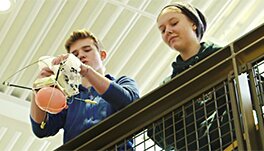
When leaders like Ramona share their practice through an intentional and supportive process like the one provided by the Leadership Lab, they allow others to see how structures, collaboration time, and leadership messaging reinforce one another. For example, visitors didn't just hear about alignment; they saw it when they observed classrooms. They saw interdisciplinary teaming and planning blocks that Ramona protected to build coherence and make PBL manageable for her teachers.
Ask yourself: Does your "collaboration time" (PLC) explicitly protect the space needed for teachers to design high-quality learning experiences? If the answer is yes, reflect on how you built teacher capacity to maximize it in service of student outcomes. If you are reading through the questions and finding yourself in the ‘not yet’ category, don’t be discouraged, small and sustainable changes are what led to lasting instructional transformation. You just need to take 3 steps to get started:
- Review your PLC calendar and mark one meeting a month to focus on PBL–putting a date on it is the first step.
- Refine or introduce a protocol that ensures equity of voice–structure supports outcomes.
- Attend the PLC meeting and engage as a participant and a collaborator–your presence signals that this is a priority.
From Observation to Application: Removing the Barriers
The "open door" policy at Jim Bridger allowed visiting leaders to witness how the leadership team systematically Removed Barriers like pacing pressures and the fear of failure. The student and teacher focus groups, which were another aspect of the Leadership Lab day, gave participants a firsthand look at how Ramona’s leadership moves—such as creating a dedicated PBL Leadership Team—reduced teacher isolation and made students feel like “teachers care[d] about what [they] actually wanted to learn more about and care[d] for the students, not just about delivering the content.”
Removing barriers doesn't mean lowering the bar; it means making it possible for your staff to do ambitious work without feeling they are doing it alone.
Ask yourself: “What strategies do I use to incorporate student and teacher voice into how I lead?” Schedule a 15-minute "listening session" with your PBL lead teachers. Ask one question: "What is the single biggest administrative barrier stopping you from going deeper with PBL, and if I could make one change tomorrow to support you, what would it be?”
Join the Movement: Your School as a Leadership Lab
The journey toward equitable, sustainable PBL at scale is not a solo mission. It requires leaders who are willing to Amplify Bright Spots —studying the teachers and schools making unique moves—and Connect Practitioners within and across schools. PBLWorks is proud to partner with visionary leaders like Ramona Fricker and the Clark County School District to make these shifts possible. When we provide the structure and leaders provide the transparency, the "secret sauce" of implementation becomes a shared recipe for success.
Want to learn more about who we are and what we do with school and district leaders? Schedule time with Christine Lilley, Strategic Account Executive, at [email protected].