

Across the Clark County School District, Project Based Learning is not an isolated initiative. It is part of a broader vision for transforming teaching and learning. Since 2020, the district’s Future of Our Schools Pilot Project has expanded from 17 to 38 schools implementing and scaling high-quality PBL, earning recognition as a 2023 PBLWorks District Champion.
An example of CCSD’s work with PBL is Jim Bridger Middle School in Nevada, where the journey began with a small but intentional step, just three teachers and a shared vision. Rather than a full-scale rollout, Project Based Learning started with a cross-curricular team and steadily expanded. Today, every teacher is implementing PBL, with plans to deepen the work even further.
In this conversation, Principal Ramona Fricker, an experienced school leader with over 28 years in education, shares how that shift happened, what changed for students and teachers, and what other schools can learn from starting small.
About Jim Bridger Middle School
|
What led the school to explore Project Based Learning?
Ramona: The shift began in the wake of the pandemic, when both students and teachers returned to classrooms with noticeably different needs. Students had lost some of their ability to collaborate and communicate, and classrooms had become more structured and isolated. Much of this shift was driven by necessary pandemic protocols, including close monitoring of student interactions, managing proximity, and limiting shared materials and movement.
There was a clear need to reintroduce interaction, engagement, and deeper learning.
Around the same time, the school joined Cohort 3 of the Clark County School District Future of Our Schools Pilot Project, which combined Project Based Learning with the ASU Workforce Model of teaming. Now in its sixth year of working with PBLWorks, the district has continued to expand and deepen this effort.
Initially, PBL was seen as an extension of traditional instruction. Through training with PBLWorks, it became clear that it offered a fundamentally different approach to designing learning experiences.
What did it look like to start small?
Ramona: The initial implementation began with just three teachers out of a staff of about 70.
Rather than waiting for broader buy-in, we launched a small cross-curricular team combining English, social studies, and science. The three teachers worked together in a shared space where the walls between classrooms were literally removed, allowing students to move seamlessly between subjects and experience learning as connected rather than separate. As they designed and facilitated this new approach, teachers also placed themselves in a learner stance, learning from one another and building their practice together.
The first year required adjustment and flexibility. However, it quickly revealed new possibilities. Students who may not have typically worked together, including general education, special education, and accelerated learners, began collaborating in meaningful ways. Engagement increased, assignment completion improved, and students showed greater interest in their learning.
How did that early success expand across the school?
Ramona: Momentum grew through visible results rather than top-down mandates.
Teachers began noticing improved student engagement and higher completion rates. More importantly, students themselves articulated how this approach supported their learning and helped them better understand content.
Over time, this led to broader curiosity and participation. Today, all teachers at the school implement at least one project, with plans to expand to two projects per year. Because the work has been developed over several years, teachers are now building on existing projects rather than starting from scratch, which has supported more sustainable scaling.
What changes have been observed in student learning?
Ramona: One of the most significant shifts has been in how students access and demonstrate understanding.
"We’ve seen Project Based Learning create more inclusive entry points for multilingual learners. Students draw on their linguistic assets, including their home languages, to collaborate and build understanding, and ultimately communicate their ideas with clarity and confidence."
More broadly, students are engaging in deeper learning. Rather than recalling information, they are applying knowledge, participating in discussions, and defending their thinking with evidence. This level of ownership has become a defining feature of the learning experience.
How has teaching and school culture evolved?
Ramona: PBL has led to a shift away from isolated teaching practices toward greater collaboration.
Teachers now work across subject areas, sharing expertise and designing connected learning experiences. This has created opportunities for deeper content integration. For example, a teacher with a background in environmental science can influence learning across multiple subjects, enriching the overall experience for students.
Instructionally, there has been a move away from strictly textbook-driven teaching toward inquiry-based learning. The curriculum remains an important foundation, but it is used with more flexibly to support project-based experiences.
What does real-world learning look like in practice?
Ramona: As PBL has expanded, so have connections beyond the classroom.
Students have designed and presented products for real audiences, such as creating energy bars for first responders and sharing their ideas directly. They have collaborated with environmental agencies and presented research to community experts.
During one presentation, a community member stayed far longer than expected, struck by what he saw:
“I have a grandson this age… I can barely get him to talk without his phone. The fact that you can get these kids to talk on their own, they’re just chatty… and they can defend their thinking.”
Moments like this reflect the deeper impact of Project Based Learning. Students are not only building knowledge, but also developing essential skills such as communication, collaboration, critical thinking, and the ability to defend their ideas with evidence.
What impact has this had, and what can other schools learn?
Ramona: The school has seen measurable improvements.
"Chronic absenteeism has decreased significantly, dropping from around 40 percent to the teens."
The school has also improved its performance rating and continues to show upward progress. While multiple factors contribute to this growth, PBL has played an important role in increasing student engagement and making school a place where students want to be.
By the Numbers: Chronic Absenteeism and PBL in CCSD An investigation of chronic absenteeism trends in Clark County School District, using publicly available data, found the following:
|
What guidance would you offer to school leaders looking to implement Project Based Learning?
Ramona: For schools considering PBL, two key lessons stand out. First, invest in high-quality training so educators fully understand the approach.
Second, start small. Beginning with a small group allows for authentic implementation and creates the conditions for organic growth. Over time, success builds momentum, leading to broader adoption across the school.
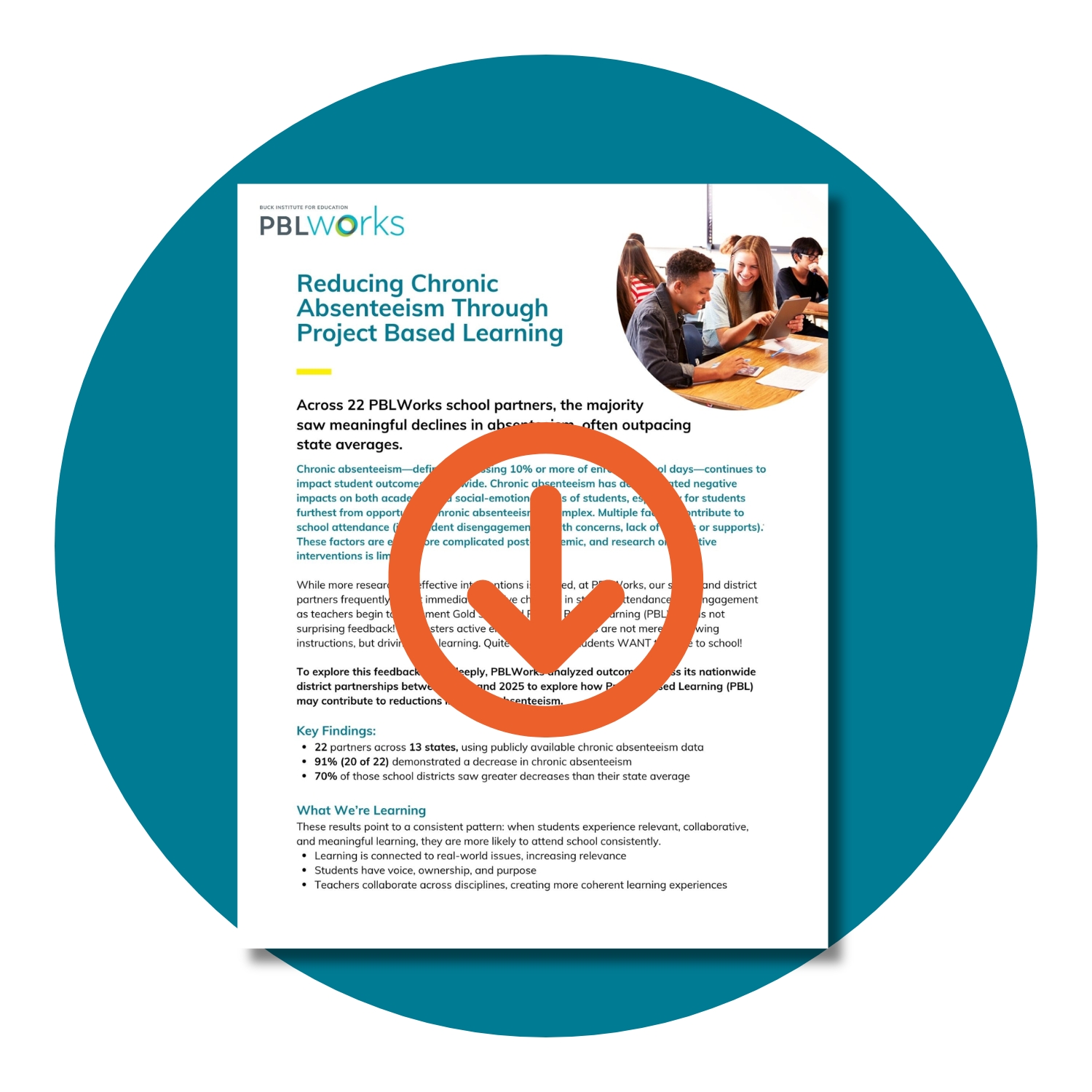
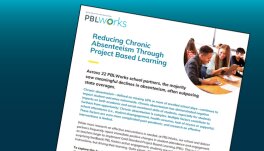
Reducing Chronic Absenteeism Through Project Based Learning
What’s possible when students are truly engaged in their learning?
Explore how PBL is helping reduce chronic absenteeism across 22 school partners.