


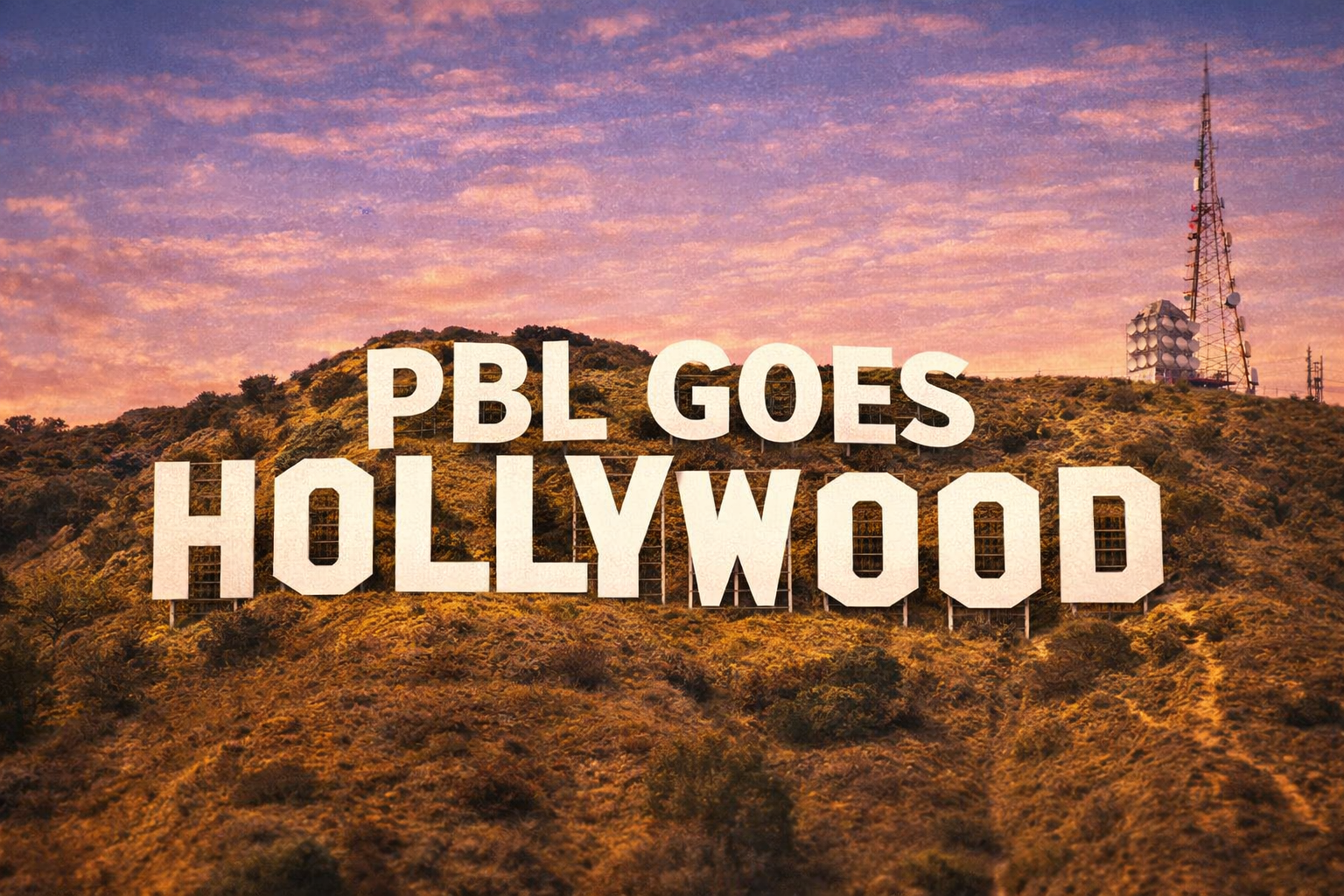
PBL is going Hollywood. “Murder 101,” a documentary series about high school crime-solvers from Tennessee, premiered at Sundance Film Festival in late January and will head to streaming platforms later this year.
Filmmakers spent a year with sociology teacher Alex Campbell and his students at Elizabethton High School to capture the nuances of real-world learning. Their efforts to crack a decades-old cold case and bring closure to victims’ families connected them with law enforcement, media, criminal profilers, and more, all while deepening their understanding of sociology. Executive producer Jon Watts and director Stacey Lee share their insights about the project in this interview.

Already the focus of a podcast that has attracted attention from around the world, the project exemplifies the engaged learning that happens regularly in Campbell’s classes. He leverages the same strategies for PBL whether he’s facilitating shorter projects or multi-year efforts. And he’s eager to share what works, as the following example illustrates.
Setting History to Music
When students arrived for their U.S. History class last fall at Elizabethton High School in Tennessee, they were greeted by a local singer-songwriter who performed examples of Appalachian ballads. That was their first surprise. The next came from teacher Alex Campbell, who challenged students to “do what he just did,” and write their own ballads about local history.
This was day one of an ambitious project that combined a deep dive into American history with music, art, storytelling, and public speaking. By the end of the semester, students would get to hear their original lyrics set to music and performed on stage.
The project didn’t happen in an honors class or an interdisciplinary program. Instead, it was a typical learning experience with a veteran teacher who leverages students’ interests and routinely connects them with experts from outside the classroom. His antidote to teen disengagement and distraction? “You’ve got to give them something more exciting than what’s on their phones.”
Structured for Success
Campbell structured the project to keep interest high and set up students for success, using strategies that he encourages other teachers to apply in their local contexts. Campbell teaches history backwards. For this project, that meant starting with recent events like the war on terror before going back in time to the Vietnam War, Civil Rights movement, and earlier eras. He used music as a compelling throughline.
Each day as students arrived for class, I would have music playing to introduce the era.
YouTube was a rich source of videos from each era, adding imagery and artifacts to unpack with students.
Campbell guided students through readings and critical analysis of everything from newspaper articles to historical essays to first-person accounts. “We read something from history every day,” he said, ensuring that the project aligned with standards. They also used critical thinking to analyze song lyrics for symbolism and insights into the past.
Songs like “Dress Blues,” for example, told the story of a young soldier killed in Iraq. “He was an ordinary guy–not a general, not someone famous.” The song helped students understand how ballads capture the history of the common person.
Connecting with Their Heritage

Many students started the project unaware that their Appalachian home was a cradle of ballads and country music. A field trip to a nearby museum opened their eyes–and their ears. At the Birthplace of Country Music Museum, a half-hour bus ride from Elizabethton High School, students learned about traditional Appalachian instruments and even got to try their hand at playing them. Many were surprised to discover that the first recordings of country music happened right here–not in Memphis or Nashville.
On the bus ride back to school, Campbell listened to students marvel at the history in their backyard. One student said, “People in this area have been making music for 200 years. Now it’s our turn.” Another added, “We’re the next generation of storytellers.”
Scaffolding Creativity
Students had to channel that enthusiasm into creating final products that reflected their understanding of history. “Writing a good song is hard,” Campbell cautioned students, but he offered them a roadmap.
I start at the end and think about, what skills and knowledge do they need to get there?
He gave them a series of prompts to break a complicated task–writing an Appalachian ballad– into manageable steps: “What’s the subject? Setting? Rhyme scheme? What’s the perspective–whose story is being told? Is there a chorus or a refrain? How many verses?” He tested the prompts by writing his own ballad.
Before starting on their lyrics, students listened to several professional recordings to identify each of those elements. Next came a deep dive into research to identify possible subjects from local history. Each student pitched four ideas to classmates, ranging from tales of bank robberies to murder ballads to soldiers’ stories. Classmates ranked their top choices, which narrowed the list and identified teammates who shared the same interest. By the end of that process, seven songwriting teams were ready to dig in.
Scotty Melton, the artist who had performed on the first day of the project, came back, guitar in hand, to conduct a songwriters’ workshop. Campbell explained, “He helped them think through, I’ve got a story–how do I turn that into a song?”
Students took up the challenge, producing at least three drafts that they shared with classmates for feedback. Finally, it was time to set their words to music.
Preparing for the Handoff
For every project, Campbell casts a wide net to connect students with experts. Through contacts he made at the Birthplace of Country Music Museum and his own network of acquaintances, he lined up enough musicians to partner with each of the songwriting teams. Some were professionals. One was a local elementary teacher who had been a performer before changing careers.
Students spent 80 minutes in deep discussions with “their” musician, answering questions about the story behind their song. They learned why it was necessary to count the syllables in each line so that words and music would align. Campbell overheard one musician cautioning students, “Don’t fall in love with your lyrics too soon.”
After another round of edits, students handed off their lyrics to the musicians. In three weeks, they would hear their final product set to music.
Meanwhile, art students volunteered to create album covers for each song, creating yet another collaborative experience in the project.
The Big Show
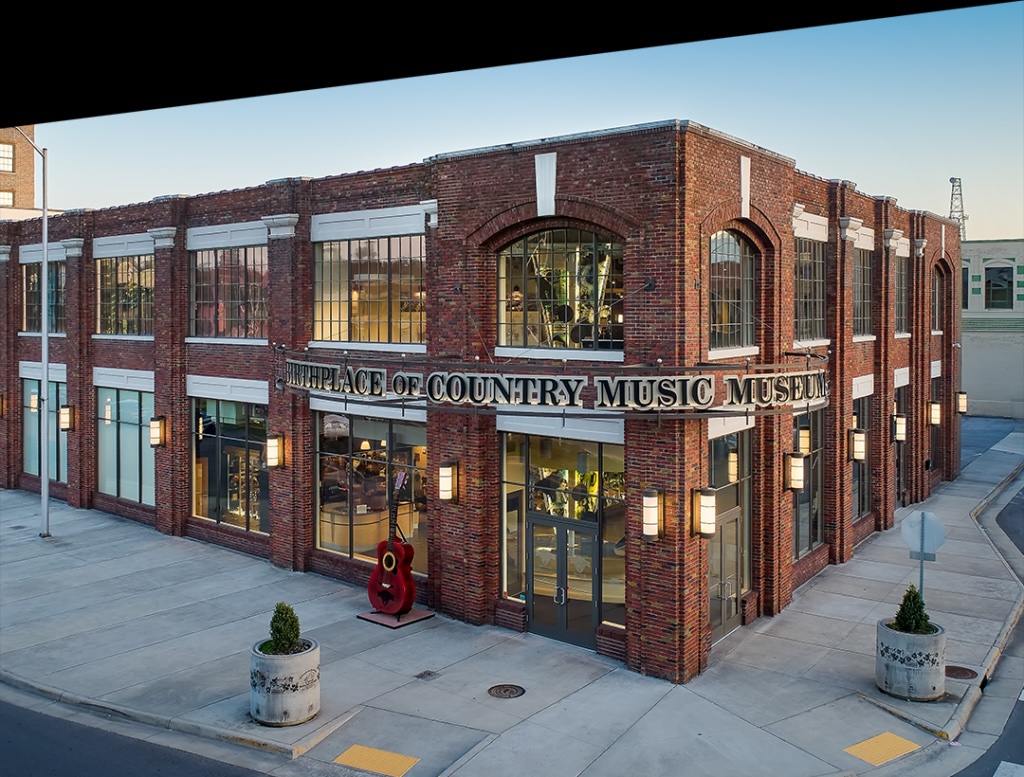
For the grand finale, students headed back to the Birthplace of Country Music Museum. Each team had prepared an introduction to their song, explaining their creative decisions and their insights into history. In the weeks leading up to the concert, Campbell built in time for practice sessions and feedback to boost students’ confidence as presenters.
A recurring theme in students’ comments was the importance of telling stories of the common person–from the tragic death of a beloved church deacon to the moral conflict of a young war hero. “History is not only in textbooks,” one student reflected. “These stories will be lost if we don’t preserve them,” added another.
Students were riveted to hear their songs performed for the first time. “I didn’t have to tell anybody to pay attention,” Campbell recalled. “The only way they used their phones was to record songs and take pictures.” After the concert, students and musicians posed for photos and signed their album covers.
On the bus ride back to school, against the buzz of student conversations, Campbell reflected on the experience. Students had learned to read critically, ask questions, think creatively, collaborate effectively, and present to an authentic audience. Empathy came into play as well, as students sought to tell hard stories with respect. Musicians volunteered their time and shared their passion with students, many commenting that they wished they’d had experiences like this in school. Museum staff welcomed the chance to connect.
Back at school, students had a make-up test waiting. But for Campbell, who has had many high points over decades of teaching, “this was one of the best days of my career.”