




On a recent math test, a fifth-grade student quietly wrote in the corner of his paper, “Math is not my thing. PBL is though.” When his teacher read it, she paused. The statement was not just about math. It was about identity, confidence, and where he felt successful.
For educators at Lead Elementary School and Beresford Elementary School in the San Mateo-Foster City School District, that student’s sentence captures exactly why they chose to pilot Project Based Learning this year. The shift was not about replacing instruction or chasing a new initiative. It was about helping students move beyond simply finishing assignments and begin seeing themselves as capable thinkers, collaborators, and contributors.
In these classrooms, learning extends beyond task completion. Through Project Based Learning, students engage in work that is deep and lasting, cultivating curiosity and developing a stronger sense of ownership over their academic experience.
A District Ready for Something More
Over the past several years, the district had seen strong growth in foundational literacy. Teachers were working tirelessly. Students were progressing. But during classroom visits, leaders began noticing something subtle yet important. While learning was happening, it sometimes felt contained. Students were completing tasks, but not always experiencing joy, voice, or deep ownership.
At the same time, teachers were asking powerful questions: How do we increase student agency and engagement? How do we create greater belonging? How do we ensure students are doing the cognitive lift of learning, not just complying with directions?
The San Mateo-Foster City School District’s strategic plan reinforces these same priorities, emphasizing student voice, deep engagement, collaboration, and reimagining what learning can look like. While the plan does not prescribe a single instructional model, its vision aligns naturally with the core principles of Project Based Learning. PBL became not an add-on, but a way to bring the district’s strategic commitments to life inside classrooms.
“We’re all in,” said Jadelyn Chang, principal of Beresford Elementary School. “We’re ready to try something different.”
Finding Clarity at PBL World
For teachers at Lead Elementary and Beresford Elementary, curiosity quickly turned into research. They read articles, explored examples, and studied frameworks. Some had already been exploring culturally responsive teaching and Goldie Muhammad’s five pursuits. They were eager, but also unsure what PBL would look like in daily practice.
That clarity began to form at PBL World, PBLWorks’ annual flagship conference, where educators from across the country come together to experience Gold Standard PBL firsthand.
Teacher teams from both San Mateo schools attended the PBL 101 workshop together, while district and site leaders participated in leadership sessions. For many, it was their first immersive experience seeing Gold Standard PBL in action.
“We went in feeling overwhelmed,” one teacher admitted. “And we left feeling grounded.”
At PBL World, they learned that PBL is not about elaborate displays or all-day projects. It is about a shift in teaching practice. It is about designing meaningful driving questions, building in voice and choice, fostering collaboration, and embedding reflection throughout the process.
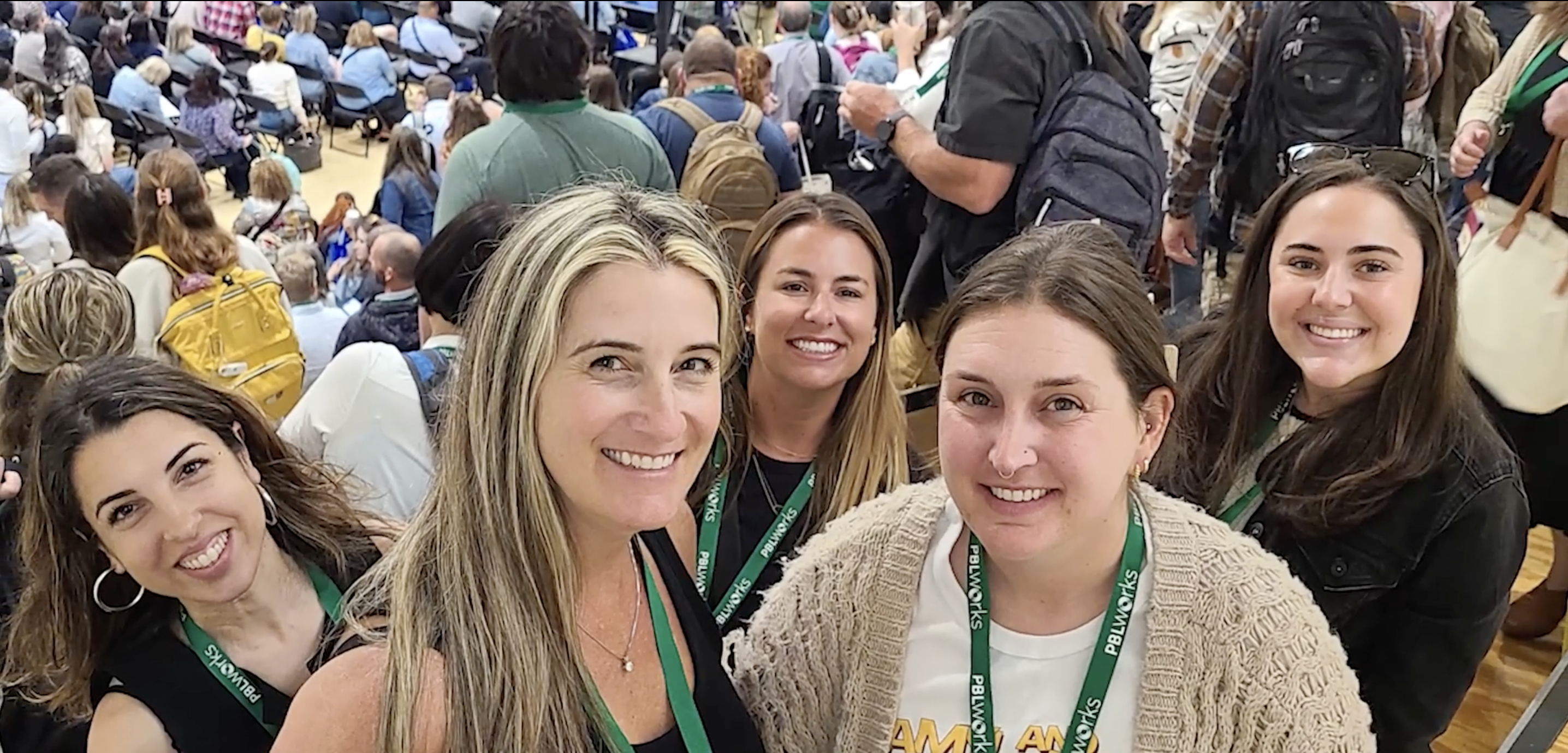
Equally powerful was attending as a team. Teachers worked side by side on project ideas, received feedback from educators across the country, and began building units rooted in their own students’ needs. Meanwhile, district and site leaders engaged in conversations about how to support implementation by protecting collaboration time, normalizing iteration, and creating conditions for success.
Jadelyn Chang, principal at Beresford Elementary School, shares how she formed an ongoing partnership with another small-school leader she met at PBL World. They now meet monthly on Zoom to share ideas and challenges, a reminder that leadership learning, like student learning, thrives in community. The experience did more than inspire. It aligned the system.
The Messy, Meaningful Middle
Back on their campuses, implementation began.
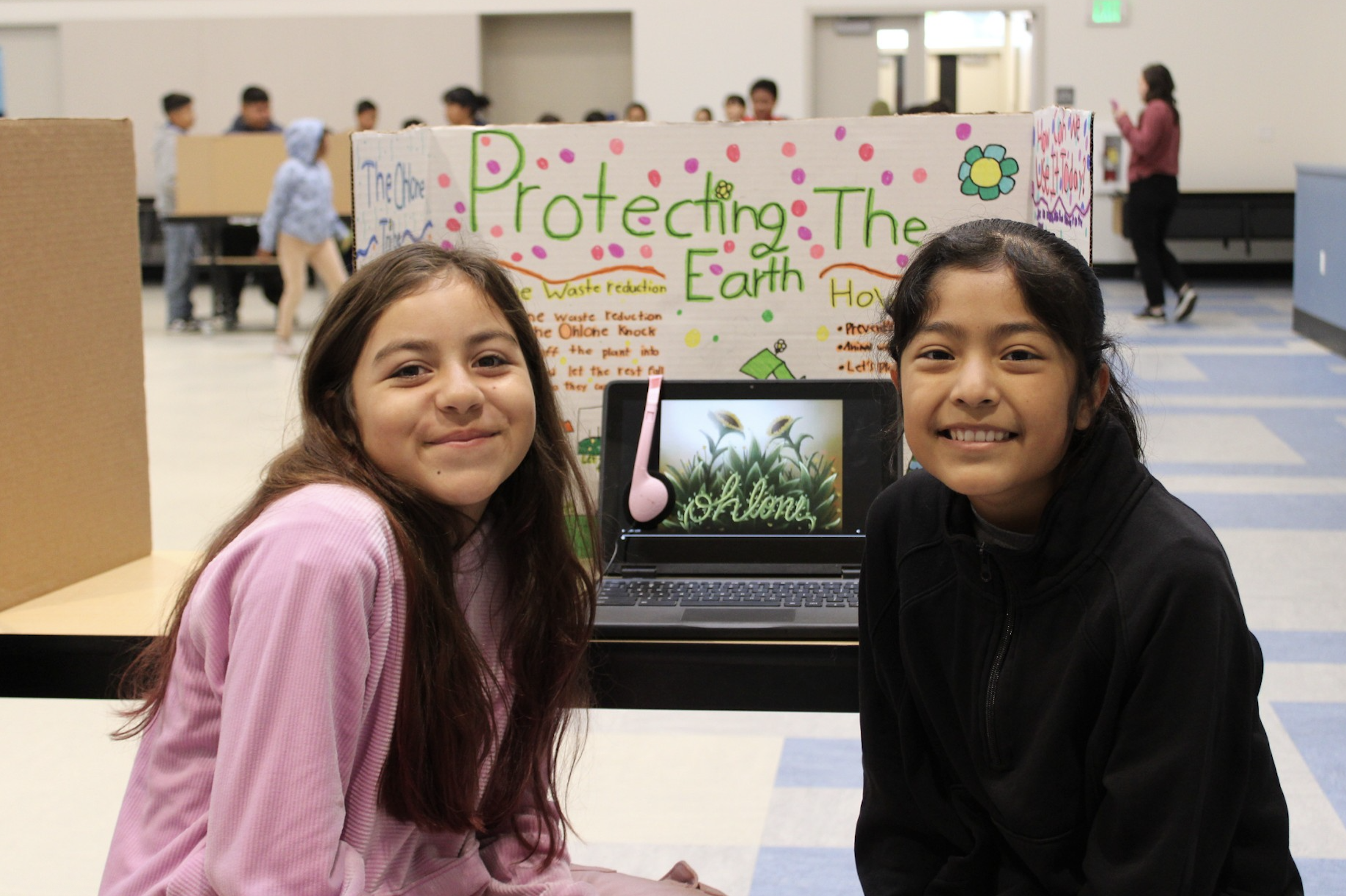
Teachers launched their first units with intentionality. At one site, students began with an identity project, grounding the work in who they are and what matters to them. Later projects addressed sustainability, social studies connections, and community-based challenges. Students built museum exhibits, developed action plans, and prepared for public showcases.
The classrooms changed.
They became louder.
They became messier.
They became more collaborative.
“For me, the mess means they’re working,” said Natalie Delahunt, principal of Lead Elementary School. Teachers had to adjust, too.
Letting go of full control required trust. Lessons did not always unfold predictably. Students asked unexpected questions. Plans shifted.
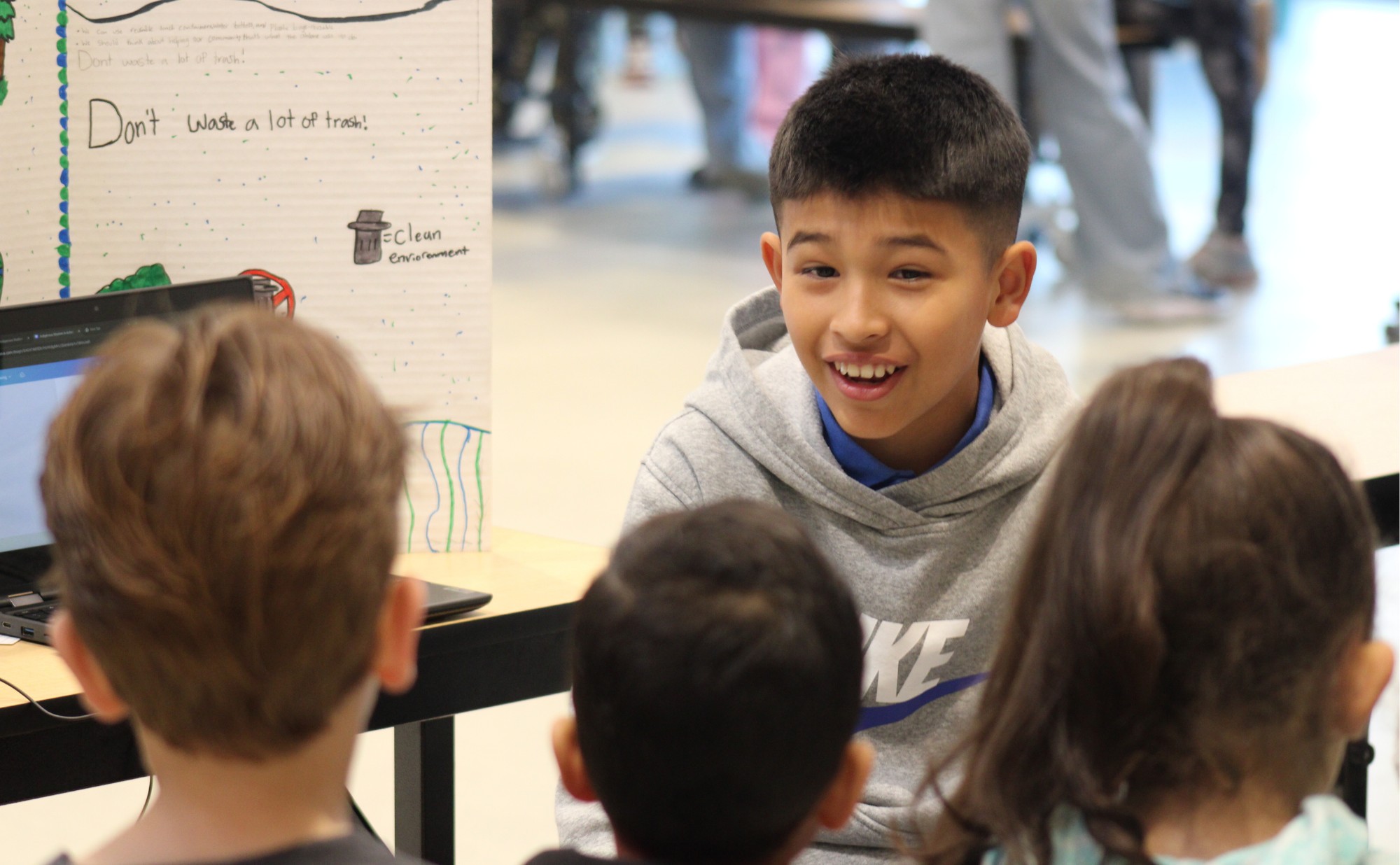
Savannah Haley, a first-year fifth grade teacher at Lead Elementary School, reflected that while PBL may have sounded smooth and seamless in graduate school research, the reality in the classroom is often loud and messy. Still, she says, it becomes more than worth it when students tell her that PBL is their favorite part of the day. In those moments, she sees what truly matters: students engaged, taking ownership, and stepping confidently into their learning.
Her colleague, Elisabeth Glikbarg, also a fifth-grade teacher at Lead Elementary School, sees that ownership unfolding in especially powerful ways for multilingual learners. “Students are trying new things and finding new ways to express themselves,” she shared. Through PBL, students are not confined to demonstrating their knowledge only in English; they communicate understanding through visuals, models, movement, collaboration, and home language connections. “We can take what we’ve learned here in the classroom and take it outside, and it matters.”
Teachers were quick to note that the continued support was essential. While PBL World grounded them in the foundational practices, it was the ongoing coaching throughout the year, including regular sessions with PBLWorks National Faculty member Drew, that helped them truly make the work their own. Backward design became clearer. Reflection routines deepened. What once felt overwhelming began to feel manageable. In addition, teachers met monthly with district leaders to reflect on student outcomes and share adjustments. Rather than expecting perfection, leaders emphasized growth, iteration, and learning alongside the teachers.
“You can’t fail a pilot unless you don’t do it,” shares Ms. Delahunt.
What Changed for Students
The most powerful shifts have appeared in students.
Teachers describe seeing new confidence in learners who may not always shine in traditional academic structures. Students who previously struggled with behavior challenges have found purpose within collaborative teams. High-achieving students are learning to step back and elevate others’ voices rather than take over.
For Lauren Long, a third/fourth grade teacher at Beresford Elementary School, the promise of PBL is clear.
“I’m not preparing my third graders to go to fourth grade,” she explains. “I’m preparing my kids to live, to live life, to be engaged citizens of the world.”
In that shift, learning becomes more than progression through grade levels. It becomes preparation for participation in the world beyond school. In one classroom, that shift showed up in a simple but powerful moment. A student who sometimes struggles socially turned to a teammate and said, “What do you think? You need a turn to talk too.”
Small moments. Big growth.
Students are also making authentic connections between content and the real world. After a social studies unit, one student said, “I used to think history was just something that happened in the past. Now I see I’m part of it.”
That sense of relevance matters.
Showcases have become celebrations of learning. Families, district staff, community partners, and even local high school students have been invited to witness final products. In one case, students asked to invite nearby community members they see every day, from tech employees to construction workers, because they wanted their work to matter beyond the classroom. Learning is no longer something they complete and turn in. It is something they share.
Leadership That Sustains the Work
Behind the scenes, leadership has been intentional. Pam Barfield, Executive Director of Curriculum and Instruction for Elementary Schools, has made the pilot a visible priority. She regularly visits both campuses, facilitates reflection sessions with teachers, and blocks her calendar to attend student showcases. Three have already taken place this year. Even when other district responsibilities compete for time, she keeps those commitments in place, signaling that this work matters. Site leaders have done the same by protecting collaboration time, embedding reflection, and listening when challenges arise rather than dictating solutions.
That support has extended beyond the district. As part of their training, teachers visited a school that has been implementing PBL for more than a decade. For Lauren Long, a third and fourth grade teacher at Beresford Elementary School, the experience lifted a weight off her shoulders. “They told us, ‘Give yourself grace when you start. It’s been a ten year journey for us. That is why it looks the way it does. And PBL is not all day. We still do reading groups and foundational instruction.’”
Seeing PBL in action reinforced that implementation is a process, not a mandate. As district leaders begin careful conversations about scaling, one reflected, “How do we make sure this is something teachers want, not something that feels mandated?”
From Completion to Connection
The shift underway in San Mateo is not about abandoning what worked before. It is about deepening it. Students are still building foundational skills. They are still reading, writing, and solving math problems. But now, those skills are embedded in questions that matter. In collaboration that builds empathy. In projects that require them to think critically and communicate clearly.
That fifth grader’s note on his math test says it best.
PBL has not solved everything, nor has it eliminated challenge or complexity. What it has done is create space for students to feel capable and to experience success in ways that traditional structures may not always allow. When students begin to feel that sense of success, when they experience connection instead of simply completing tasks, something powerful shifts. They begin to see themselves not just as students finishing assignments, but as learners shaping their world.
In San Mateo, that is the real work of Project Based Learning.

A Note of Gratitude
This story is a culmination of interviews with seven educators across the San Mateo-Foster City School District, including teachers, site leaders, and district instructional leaders. It would not have been possible without their time, reflection, and willingness to share their experiences so openly.
With gratitude to:
- Savannah Haley, Fifth Grade Teacher, Lead Elementary School
- Elisabeth Glikbarg, Fifth Grade Teacher, Lead Elementary School
- Natalie Delahunt, Principal, Lead Elementary School
- Julee Flores, Fourth/Fifth Grade Teacher, Beresford Elementary School
- Lauren Long, Third/Fourth Grade Teacher, Beresford Elementary School
- Jadelyn Chang, Principal, Beresford Elementary School
- Pam Barfield, Executive Director of Curriculum & Instruction (Elementary), San Mateo-Foster City School District
- Diego Perez, Director of Communications at San Mateo-Foster City School District