
How will you and your students celebrate their learning and accomplishments?
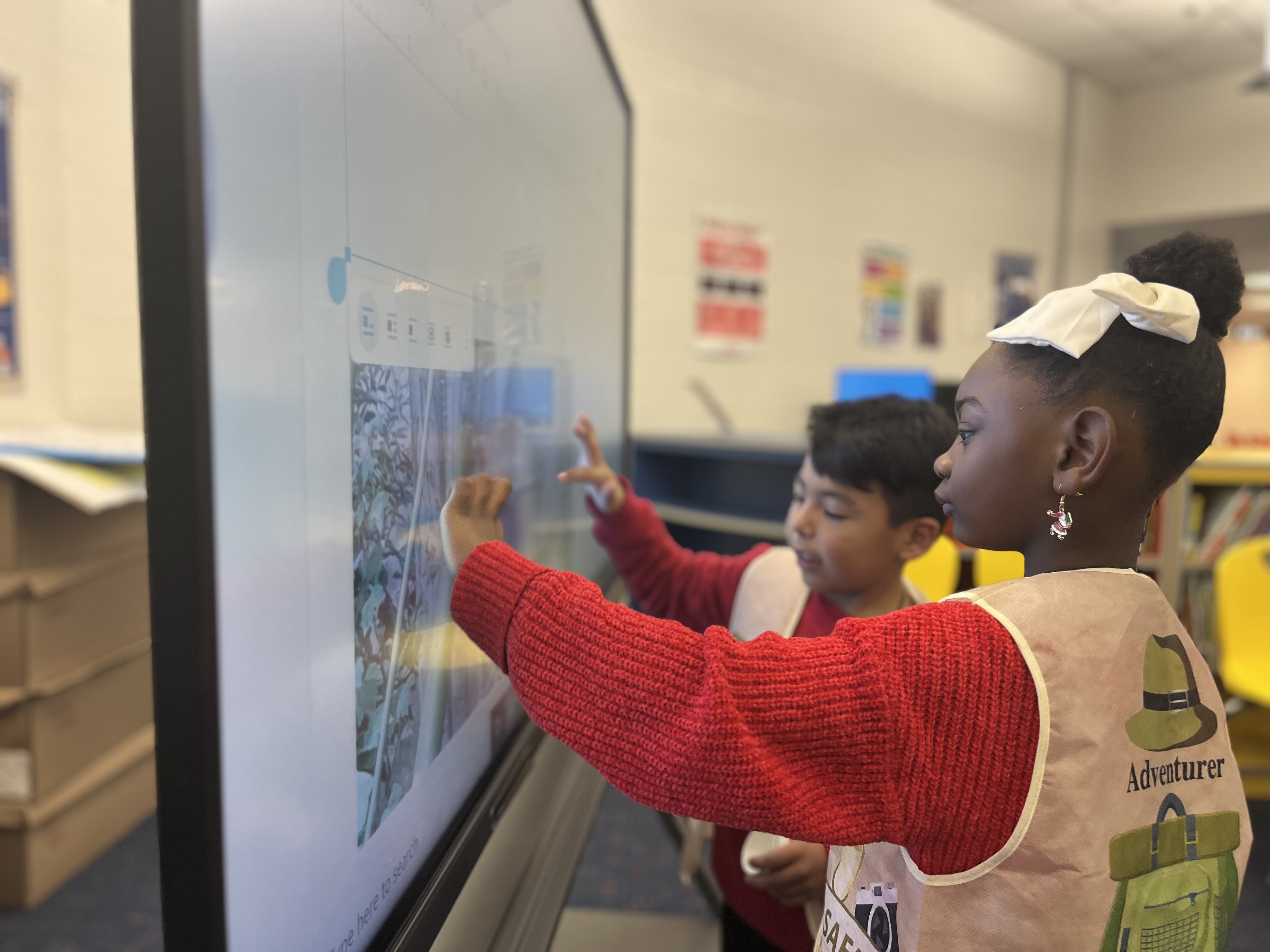
You might know that one of the Essential Project Design Elements of Gold Standard PBL is Public Product: the final product(s) through which students demonstrate what they’ve learned by presenting it to people beyond the classroom. The public product increases student engagement and motivation by connecting project learning to a larger purpose. Sharing their products with a wider audience raises the stakes for students and encourages them to produce higher quality work.
In conjunction with the presentation of their public products, the end of the school year is an optimal time to celebrate students’ learning and accomplishments through an exhibition of student work or PBL showcase . There are a variety of ways to organize one of these events, so it’s important to consider your students, the nature of their work, the audience, and your community context as you envision, plan, and prepare to host one.
Consideration 1: How many students and/or classes will be showcasing their work?
A single classroom of students working in teams might only have a few products to present, whereas a project implemented across multiple classrooms with students creating individual products will have many more. If numerous projects have been completed across various grade levels and/or subject areas, you may want to host a school-wide event. If the entire school is engaged in Project Based Learning, the school-wide PBL Showcase is definitely for you!
Consideration 2: How will student work be displayed at the exhibition?
Public products can take myriad forms, and each one brings a different set of considerations for how best to present or display it in an exhibition of student work.
- If students are showcasing written work: articles, books, brochures, letters, manuals, reports, etc. . . . Will these be printed out or displayed digitally?
- If students are sharing digital products: apps, podcasts, slideshows, social media, websites, videos, etc. . . . How will attendees access them? Will you cue up devices around the room for guests to use, or perhaps provide QR codes so they can access the work on their smartphones?
- If students have created tangible 2-D or 3-D products: blueprints, drawings, machines, models, prototypes, structures, etc. . . . Is there a large space, such as a library, gym, or cafeteria, where they can be exhibited on walls, display boards, and/or tables?
- If the project deliverables include performances or presentations: delivering a speech; engaging in a debate, mock trial, or panel discussion; performing a dramatic scene, poem, or song; proposing an idea, solution, or product, etc. . . . Will students give their presentations live and in person, or in advance to be recorded and shown at the event? If students are performing live, where will you host these presentations? How will you schedule them and organize the audience?
Consideration 3: How will students present and explain their work?
One common misconception about PBL is that students must always share their work in a formal, oral presentation to a large, in-person audience. While PBL can certainly provide rich and meaningful opportunities for students to develop valuable public speaking skills, there are plenty of other ways to meet the “gold standard” expectations that:
- Student work is made public by presenting, displaying, or offering it to people beyond the classroom.
- Students are asked to explain the reasoning behind choices they made, their inquiry process, how they worked, what they learned, etc. (PBLWorks Project Design Rubric)
For example, if students are displaying physical or digital work in a museum-, gallery-, expo-style format, they might serve as docents or tour guides showing visitors around the space, or they might station themselves next to their work while attendees rotate from one display to the next. Students may also want to invite guests to engage in activities based on their projects, for example by trying their hand at a skill or process students have learned, or by interacting with hands-on products students have created.
Of course, if students are making professional presentations – giving speeches or creative performances; participating in debates or panel presentations; pitching ideas or products – you may want to gather the audience in a large community space. However, depending on the number and length of these presentations, it might be more appropriate to host multiple presentations simultaneously in smaller spaces or at roundtables. On the other hand, it may be more feasible for students to give their presentations in advance and show the video recordings at the event.
In addition to sharing their work, students also need to share the PBL process by explaining their project experience and reflecting on their learning. This can be done throughout the project via learning logs, self-assessments, and written reflections, as well as at the end of the project through annotated work products, artist’s / designer’s / creator’s statements, or final reflection essays, any of which can be included in the students’ exhibits or presentations. Student explanations and reflections can also be shared in spoken formats such as interviews, partner discussions, or verbal commentary, which can be recorded in advance and showcased at the event, or students can, of course, discuss their work in person.
In preparation for the exhibition of student work, be sure to support students with the learning experiences needed to gain the necessary speaking skills. Even if students will simply be engaging in informal conversations with individual attendees, they will need practice speaking about their work and explaining what they’ve learned to others. Help students strengthen and develop their communication skills by providing models, guidance, low-stakes opportunities for practice, and feedback. Set students up for success by giving the audience the list of questions students have practiced and are prepared to answer.
Consideration 4: Who will be invited to attend the event? Who is the authentic audience for the work?
Having their work seen by others beyond the teacher and their classmates is an important way to enhance the authenticity of a project, so having families, other students, educators, and other members of the school community attend your PBL Showcase is key. To further strengthen the real-world context of the experience, have students determine the most authentic audience for the kind of work they’ve produced and, if possible, invite members of that audience to the event as special guests. For example, if students are engaged in a project designed to have a real impact on others by addressing a school or community need, or by creating a product or service, they can invite relevant community members or potential customers / clients. If students are pitching businesses, proposing community initiatives, or advocating for policy changes, they can invite relevant professionals such as local business leaders, community organizers, or policymakers.
Throughout a project, students can benefit from connecting with outside experts, professionals, and stakeholders who provide feedback, perspectives, and insights that help shape their work. These connections can happen in many ways, from guest speakers and exhibition attendees to video conferences, mailed work, or virtual collaborations.
Explore the two resources below for strategies on connecting students with outside experts and authentic audiences.
| Working With Outside Experts Strategy Guide | 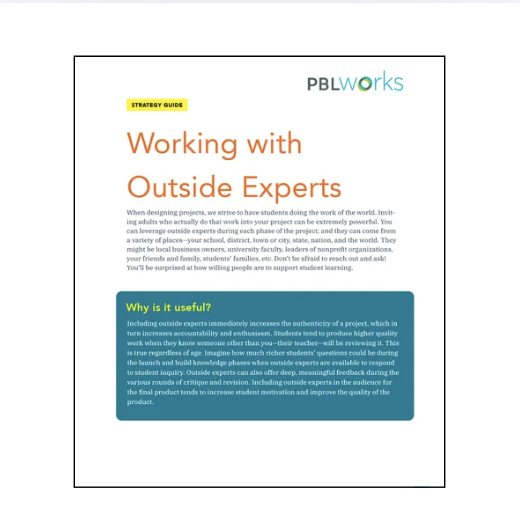 |
|---|---|
| A Lesson Learned On Working With Experts in PBL: How To Prepare Them and Your Students | 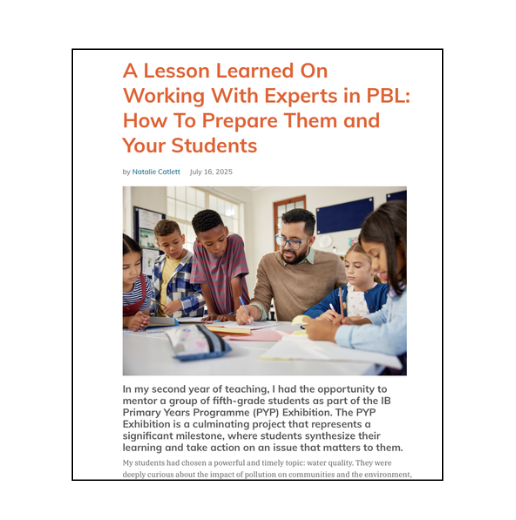 |
Consideration 5: How will students engage with the audience, gather feedback, and reflect on what they’ve learned?
Depending on how your event is organized, there are a variety of ways for students to interact with attendees and invite their feedback. If students are making presentations, you might have a panel of assessors (including experts or special guests) designated to ask the students questions and share written feedback, or you might encourage the entire audience to participate in a Q&A discussion and ask them to complete a Feedback Form. If students are displaying their work on walls and tables, you can provide sticky notes for visitors to post comments on individual products, designate a poster for guests to write on, or set up a video interview station to record their responses to the exhibit, and of course, encourage attendees to offer their feedback to students in person.
When asking guests to respond to the student’s work, be sure to provide guidance and scaffolding for effective critique by sharing examples of “kind, specific, and helpful” feedback, offering sentence starters, etc. Also, be sure to set aside time and plan a process for students to review and reflect on the comments they’ve received. (In some cases, it may even be appropriate for students to apply that feedback as they revise and refine their final products one more time before sharing them with the authentic audience and/or submitting them for a grade.)
Ultimately, the profound impact of a PBL exhibition can only be fully realized when students reflect on how their learning, hard work, and final products were recognized, acknowledged, and appreciated by the attendees. It’s by reflecting on their showcase experience and how their work was received by the audience that students truly grow and develop from this powerful culminating experience for PBL.
Ready to Get Inspired?
You can read about Exhibition Night at Katherine Smith Elementary School in Evergreen School District, San Jose, California and the STEM Expo at TAF@Saghalie in Federal Way Public Schools, Federal Way, Washington here on our blog:
- Larmer, John. “From Open House to PBL Exhibition Night.” May 11, 2018.
- Armstrong, Kevin. “School-Wide PBL Exhibitions: Not Just About the Students.” July 10, 2019.
- Sanchez, Erin. “PBL Showcase: Doing School Differently.” April 7, 2023.