



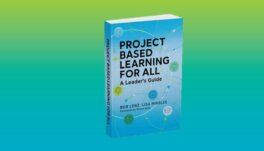



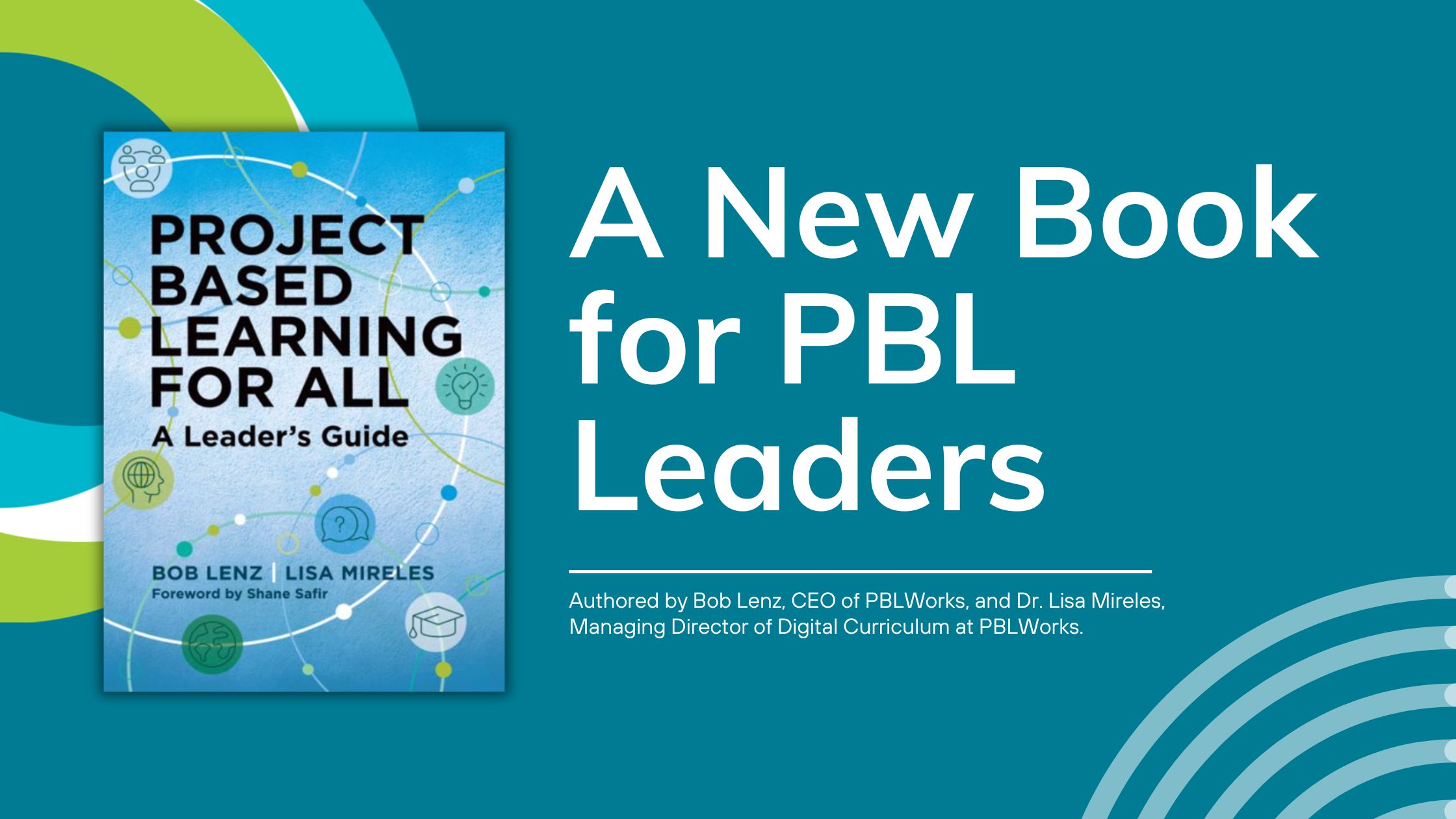
PBLWorks has published a new book! Project Based Learning for All: A Leader’s Guide has just been released, in partnership with ASCD. This is our first book for school and district leaders; our previous books were aimed mainly at teachers. We think our new book meets an important need, as leaders are key to making a PBL effort succeed.
The authors are Bob Lenz and Dr. Lisa Mireles. In writing the book, they have drawn from what they have seen in their time at PBLWorks and from personal experience - they have walked their talk. They both are highly committed to advancing educational equity and deeper learning for all students.

Bob is the CEO of PBLWorks. He began as a middle and high school teacher, then co-founded Envision Education, which developed project-based schools in the San Francisco Bay Area. He was an Envision high school principal and Envision's CEO and chief of innovation from 2001 to 2015.
Lisa is currently Managing Director of Digital Curriculum at PBLWorks. She has been a classroom teacher, school principal, assistant superintendent, and district school improvement specialist in public, public charter, independent and international schools. She coached school and district leaders in her first years at PBLWorks in our School and District Leadership team.
What’s in the Book
Project Based Learning for All: A Leader’s Guide begins with an overview of several frameworks that set the stage for what’s to come: our model for Gold Standard PBL, our “PBL Equity Levers,” and the frameworks that guide our work with schools and district leaders. Subsequent chapters provide a detailed look at each piece of the leadership frameworks:
- Crafting the Vision
- Developing the Culture
- Designing the Infrastructure
- Building Capacity: Gold Standard PBL
- Building Capacity: Assessing Deeper Learning
The book concludes with two additional chapters:
- Measuring Impact for Continuous Improvement
- Translating PBL Leadership Practices for District Leaders
Bob and Lisa offer not only theoretical discussions but practical, hands-on applications for a leader’s work. They use the Know–Do–Reflect (KDR) instructional framework in each chapter as an organizing scheme:
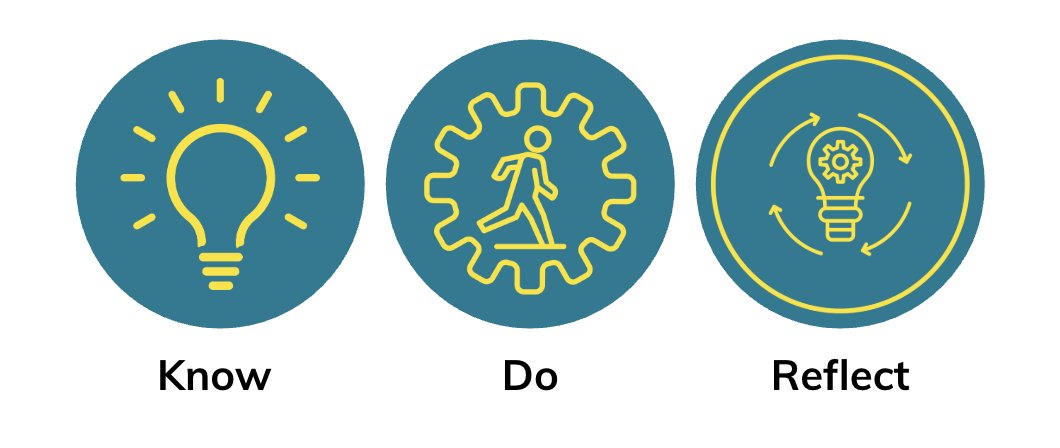
Know: Each chapter starts with the conceptual background about the domain emphasized in the chapter, then describes the leadership practices associated with it and how they are applied in schools and classrooms. The authors also share leadership stories from the field of how one of PBLWorks’s partners brought PBL-focused practices to life in their own context.
Do: This section features suggestions for leadership moves (mini-trials) leaders can put into action related to the knowledge they’ve just acquired.
Reflect: This section includes prompts to reflect on what leaders learned during their mini-trial and in reading the chapter that can help close the gap between their current and envisioned leadership practices in the focus domain.
The Authors’ Thoughts
I posed a few questions about the book to Bob and Lisa, and here’s what they said:
What’s a good summary of the basic message you want to say to school leaders?
Bob Lenz:
Leading towards PBL for all requires vision and courage - I hope our book gives leaders the courage to act.
Lisa Mireles:
You got this! Aspire to learn as much as you can about PBL either slightly ahead of or alongside your teachers. Think of yourself as lead learner and chief cheerleader. Be thoughtful and strategic but don't spend so much time planning that you don't actually get started. The best way to make progress is to START even if you don't think you know exactly how to do this.
Are there any special tips or advice you'd give leaders whose teachers are using pre-designed projects like those available on PBLWorks TEACH?
Bob Lenz:
I would tell leaders concerned about how hard it is for teachers to design and facilitate PBL to use our book to put the conditions in place and use TEACH to give their teachers rich resources to launch PBL in their classroom.
Lisa Mireles:
I would say just because teachers are using pre-designed units, that does not mean they don't need time to learn about PBL and unpack the projects with other teachers. I would encourage them to set high and clear implementation expectations and to provide high levels of support. This support should include helping teachers learn about and practice the Project Based Teaching Practices, providing time for unpacking and making sense of the units in community with others, examining student work, and for troubleshooting, problem-solving and reflection. The goal is for teachers to have the best experience possible when implementing the projects so they want to try another project.
What are your hopes for the book?
Bob Lenz:
I hope the book inspires and supports leaders to make PBL happen for all their students whether they get to work with our amazing team at PBLWorks or not.
Lisa Mireles:
I hope leaders are inspired to try some of the tips in the book and that they actually follow the KDR process in each chapter. I hope school leaders like it and tell their colleagues about it. I hope districts engage in book studies of it with their school leaders. Mostly I hope it results in more Gold Standard PBL for students across the country and world!
What Educator Thought Leaders Are Saying About the Book
"As a former leader of a project based school, I was often asked, 'Who should we work with to make PBL equitable, practical, and scalable across schools, districts and communities?' My answer never changed: Talk to Bob Lenz and Lisa Mireles. Project Based Learning for All brings their expertise straight to you—blending stories, research, and elegant frameworks with reflection prompts and activities to help shape your own vision. It's the book I wish I'd had at the start: a trusted design guide to imagine boldly, lead with purpose, and create deeper learning experiences for each and every student. This is your design guide to the future."
—Laura McBain, managing director of the Stanford d.school
"How do we tap into the curiosity of students so that they are motivated to learn on their own and engaged in using their higher-order thinking skills? This is a critical question for educators who believe in the power of education to transform lives, and it is a question addressed in this important new book. At a time when AI and other forms of technology threaten to make our students lazier and less skillful, project based learning (PBL) may very well be an antidote that can unleash the imaginations and problem-solving abilities of students. This book is an excellent guide for educators who seek to use PBL to transform teaching and learning."
—Pedro A. Noguera, PhD, dean of Rossier School of Education and author of A Search for Common Ground: Conversations About the Toughest Questions in K–12 Education
Get the Book Ready to dive deeper?
🛒 Project Based Learning for All is now available. Get your copy today.
Watch the Trailer
🎥 See the vision behind the book come to life in our short trailer. Watch the book trailer.
Join the Book Club
📚 A Project Based Learning for All: A Leader's Guide Book Club is coming in 2026! Interested? Share your email here, and we’ll send details your way.