

Each summer, educators from across the world gather at PBL World to explore how Project Based Learning can create more meaningful, connected learning experiences for students. For many attendees, the experience offers not only practical strategies and professional growth, but also a renewed sense of possibility about what teaching and learning can become.
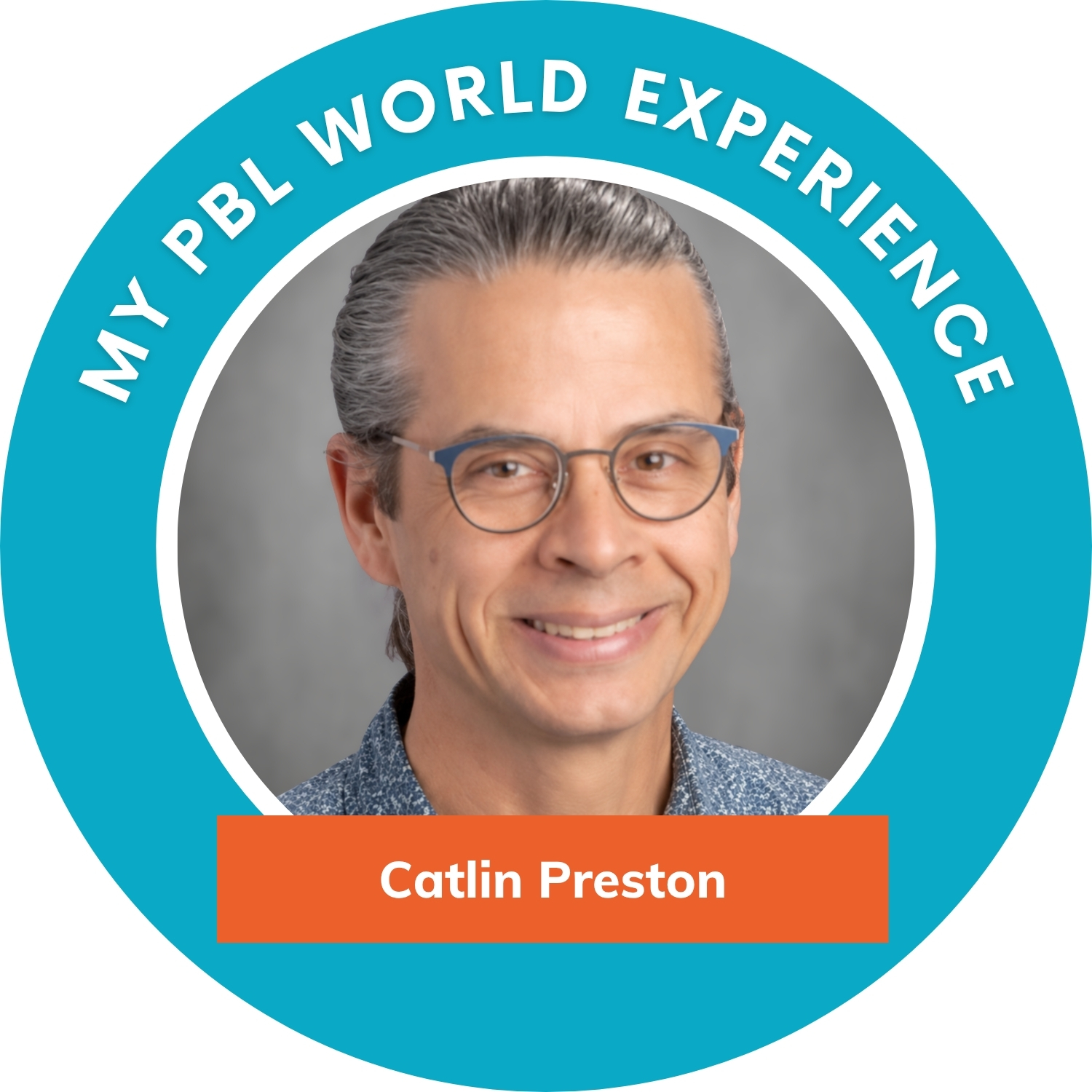
Catlin Preston is a Social and Emotional Care Teacher, Recess Coordinator, and PBL Coach at Nuestro Mundo Public Charter School in Providence, Rhode Island. After stepping into a new PBL coaching role at his school, Catlin attended the PBL Coaching Workshop at PBL World 2025 to deepen his understanding of Gold Standard PBL and strengthen his ability to support teachers through the coaching process.
In this Q&A, Catlin reflects on his journey into PBL coaching, the value of starting small, how PBL helps connect learning across disciplines, and the meaningful moments of connection and reflection he experienced throughout PBL World.
Tell us a bit about yourself.
I’ve been in education for over 20 years, primarily as a classroom teacher working in early childhood grades, mostly K–3. I’m currently the Program Coordinator and PBL Coach at Nuestro Mundo Public Charter School, a dual language school in Providence, Rhode Island.
I originally got into education through a summer program called SummerBridge while I was in college, where I taught middle school students. That experience helped me realize that public schools are one of the few places where our democracy truly comes together, and I wanted to be part of that work.
How would you describe the community you serve, and why does Project Based Learning connect so deeply to your work?
At Nuestro Mundo, we serve a diverse multilingual community, including many immigrant families from across Latin America. Spanish is an important part of our students’ linguistic and cultural identities, and our school works to honor and sustain that in the learning experience.
Project Based Learning connects deeply to our mission because it gives students opportunities to engage with real-world issues, collaborate with community organizations, and connect learning to both their local community and the larger world around them.
What led you to PBL World?
My first experience with PBLWorks was actually through an online workshop in 2022, shortly after our school opened. At that point, we were trying to bring PBL more intentionally into focus within the school.
What really struck me was realizing there was an entire organization dedicated to making PBL not just an “extra,” but the core of students’ educational experiences. It was a revelation to me that there was an organization really working to make PBL not just the side thing... but the main course of students’ educational experience. When I stepped into the PBL coaching role, attending PBL World felt like the natural next step.
What’s the most valuable concept, idea, or strategy you picked up at PBL World?
One of the most valuable parts of the experience was learning alongside other PBL coaches and participating in hands-on coaching practice during the workshop. We actually worked directly with educators developing projects and practiced coaching conversations in real time.
That experience helped me think more deeply about how to support teachers in refining projects, differentiating for students, and approaching projects from multiple angles.
Another thing that really stood out to me was how integrated PBL is. PBL is integrated curriculum. It’s bringing all those things together. Instead of separating learning into isolated subjects, PBL allows students and teachers to connect literacy, science, math, collaboration, and community into one meaningful experience.
How have you applied what you learned at the Coaching Workshop to your teaching or leadership?
One of the biggest shifts for me was learning that it’s okay to start small.
Initially, I imagined teachers would be building projects entirely from scratch, but our work evolved into adapting existing curricular units and layering in Gold Standard PBL elements. That actually helped teachers feel more comfortable and confident.
Sometimes it’s smaller steps. You bring in the project pieces that can really augment what teachers already have and what they’re comfortable with.
This year, students connected with local experts and organizations in really meaningful ways. Second graders studying insects connected with beekeepers, and third graders studying weather and climate worked with local experts, including architects focused on climate-friendly design.
We also introduced more public presentations, where students shared their work with other grade levels and received feedback. That became an important community-building experience across the school.
Did you attend PBL World with a team? If so, how did that shape your experience and what impact did it have on your learning and collaboration?
I attended on my own, but I still made some really meaningful connections. I especially connected with another educator from Greece who was also attending solo.
One reflection I had was wishing there were even more opportunities for educators with shared interests, like dual language educators, to connect with one another during the conference. Still, I never really felt alone because there was such a strong sense of community throughout the experience.
How did being in Napa Valley add to your conference experience?
Honestly, one of my favorite memories was hiking in Skyline Wilderness Park.
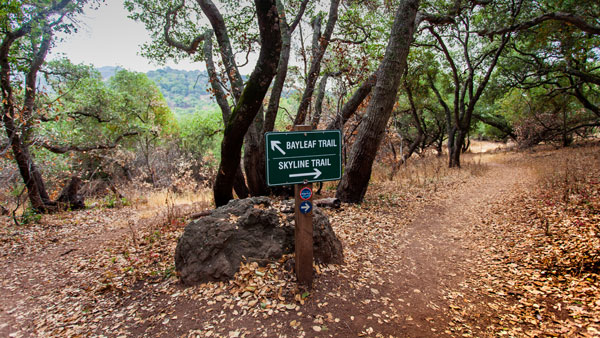
I went before one of the evening events and then returned the next day for a much longer hike. I took a four-and-a-half-hour hike and went really deep into this park... it was really a great hike.
The combination of meaningful professional learning during the day and the opportunity to recharge outdoors made the experience really memorable.
What’s one memorable PBL World moment and one tip you’d give a first-time attendee?
One thing I’ll remember most is the sense of possibility and excitement around what projects can become for students and teachers.
And my biggest advice for someone just starting with PBL is simple: “It’s okay to start small.”
PBL grows over time. It’s project by project, year by year, building richer and more interdisciplinary experiences as teachers and students gain confidence.