



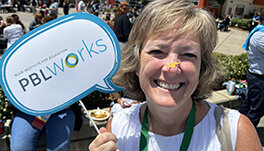
I recently had the privilege of attending Calaveras Hills High School’s PBL Showcase. After supporting them on their PBL journey for the last three years, I know firsthand how hard the faculty has been working to provide rigorous and engaging Project Based Learning and how hard the students have been working to develop high-quality products. So I was thrilled to join them in a celebration of all that hard work on full display!
Calaveras Hills High School (CHHS) is a continuation high school in the Milpitas Unified School District, near San Jose, California, which students attend for smaller class environments and credit recovery opportunities. The faculty includes nine teachers and approximately 135 students in grades 9-12. Four years ago, CHHS began implementing Project Based Learning (PBL) as their primary mode of instruction, and over the last few years they’ve diligently grown and strengthened their PBL initiative.
Planning This Year's PBL Showcase
Early in the school year, CHHS teachers gathered to establish a common vision for their PBL Showcase and reach consensus around their goals and criteria for success. Since this was their second annual event, the planning process began with a reflection on the previous year’s showcase to determine how they wanted to iterate and continue building on their first experience.
Next, the faculty read the PBLWorks blog post, “From Open House to PBL Exhibition Night” and engaged in a thoughtful conversation about how the five purposes outlined in the article resonated with their own priorities for the event. They also read “Don’t Just Share the Products, Highlight the PBL Process” and looked at photos of project walls and PBL Showcases from other schools. After discussing these examples, the faculty created a set of common expectations for their exhibition of student work.
CHHS Faculty's PBL Showcase Expectations |
|
One key goal of CHHS’s PBL Showcase was for students to present their final products to the wider community. While several projects had already been shared with authentic audiences – for example, policy proposals sent to politicians and children's books read aloud to elementary students — the campus exhibition offered a way for all students to make their work public to a broader audience beyond their teacher and classmates.
Recognizing that “making student work public is an effective way to communicate with families, community members, and the wider world about what PBL is and what it does for students” (Larmer and Mergendoller), the CHHS faculty also embraced the idea of their showcase as a public relations opportunity. So, as they envisioned this year’s event, they kept three audiences and purposes in mind:
- Current students and families celebrating their learning and accomplishments
- Prospective students and families considering joining the CHHS community
- Members of the local community, such as district leaders and educators from other schools, interested in learning more about their PBL initiative.
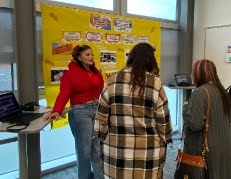
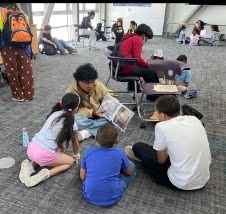 After hosting their first PBL Showcase in a large multipurpose room, the CHHS faculty realized they needed more space to fully display each project, so they decided they would exhibit student work throughout their classrooms. Meanwhile, teachers were beginning to incorporate project walls more consistently, and they discovered that in addition to being powerful tools for teaching, project walls are a great way to help the audience understand the whole story of the project. They leveraged their project walls – and sometimes their entire classroom – to orient visitors to the project, highlight the key learning experiences, and provide context for the students’ final products.
The Night of the PBL Showcase
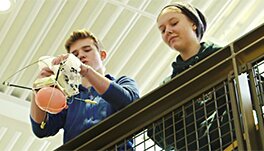
Given that many CHHS students are working and/or teen parents, they weren’t all able to attend an evening event. So teachers and students made sure their classroom exhibitions painted a complete picture of the project and the student work spoke for itself. Hand-written, printed, and 3-D products were displayed on walls and tables around the room. Digital products were cued up on laptops at individual stations for guests to navigate and explore. Students posted written reflections or QR codes leading to recordings of their reflections beside their final products so their voices would still be present and the audience could read or hear about their learning.
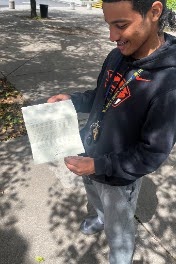 Teachers supported students who were able to attend by preparing them to interact with the visitors and speak about their project experiences. Some students practiced giving formal presentations of their work while others simply prepared to host the exhibitions and answer their guests’ questions. Students developed and rehearsed questions and answers, applying peer and teacher feedback to strengthen their responses and gain confidence.
When considering how to invite audience feedback, teachers and students were mindful that attendees might be visiting all nine classrooms, so they focused on simple and accessible ways for them to respond to the work. Ideas included:
- Hanging chart paper with a heading such as “Celebrations” or “Kudos” and providing sticky notes or markers for people to contribute comments
- Distributing comment sheets with questions, prompts, or sentence starters such as “I like how you …” “I was impressed by …” or “Your work shows …”
- Asking attendees to complete an Audience Feedback Form or online survey
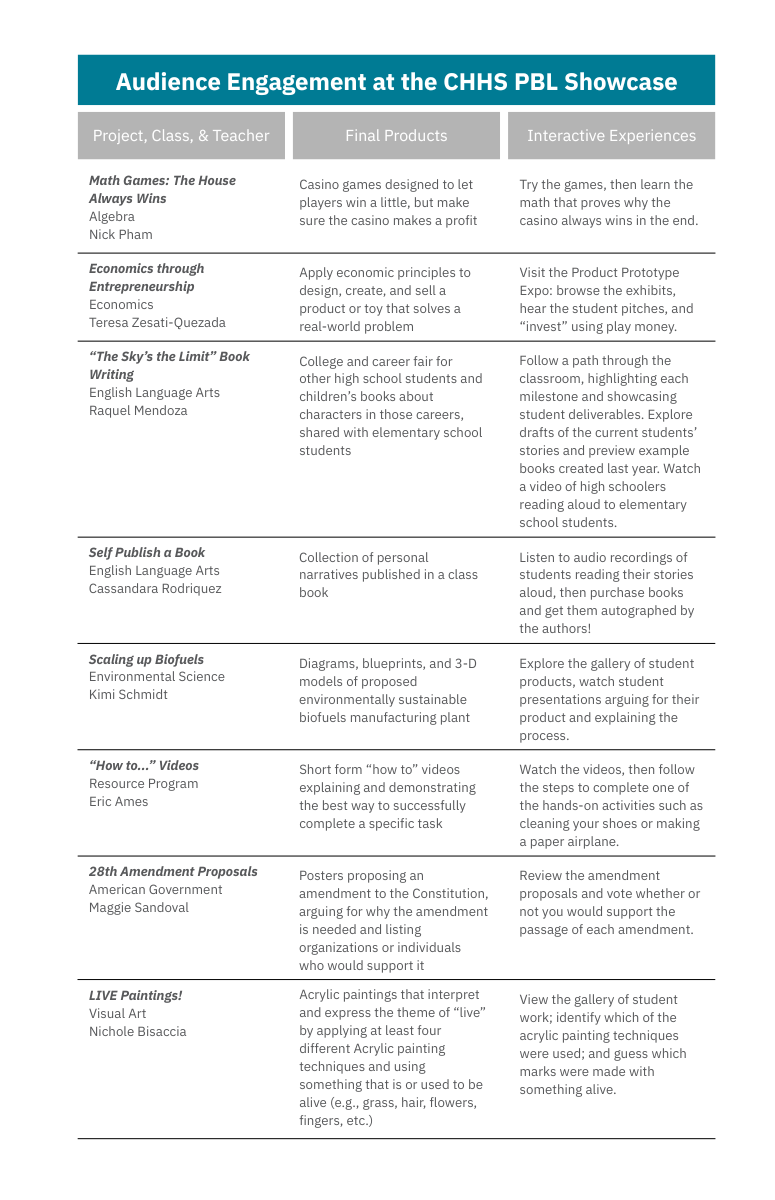
To knock their PBL Showcase out of the park, CHHS teachers and students took things one step further by offering interactive experiences for their visitors, inviting them to participate in various aspects of each project.
When guests arrived, they were welcomed by student ambassadors, served a teacher- and student-made spaghetti dinner, and presented with an overview of PBL at CHHS and an orientation to the showcase. As students, families, and community members enjoyed the event, it was wonderful to witness students eagerly ushering their peers and parents to view their work on display and to see visitors exploring the exhibits while teachers proudly surveyed the scene. One group of students were gathered around a video call with a former classmate, and another student was recording interviews with attendees for her Media Studies class.
I couldn’t help but smile when I overheard a prospective parent chatting with one of the teachers. The father mentioned that he was interested in sending his son to CHHS because of the emphasis on PBL. He explained that he was looking for “a school that will teach him to love learning.” I smiled because I knew he was in the right place. And the evidence was all around us – speaking to us from the students’ work in every classroom and from the large display featuring their comments about what PBL has taught them – from persistence and problem solving, to communication and collaboration, and indeed, the love of learning!
Selected Quotations from CHHS Students |
Something I like about PBL is...
|
One of my favorite things about PBL is...
|
Because of PBL, I've learned...
|
Reflecting back on all they discovered while planning and hosting their PBL Showcase, I’m very grateful to the CHHS faculty for letting me share their story here. I hope this window into their process will provide valuable insights and inspiration as you prepare to host your own successful showcase in the future.
While supporting the CHHS faculty this year, I reached out to several of my fellow National Faculty colleagues who generously shared models and suggestions for them as well. Huge thanks to Dori, Eric W., Erin S., James, Joe, Kay, Maggie, Myla, and Sharyl Lynn.