


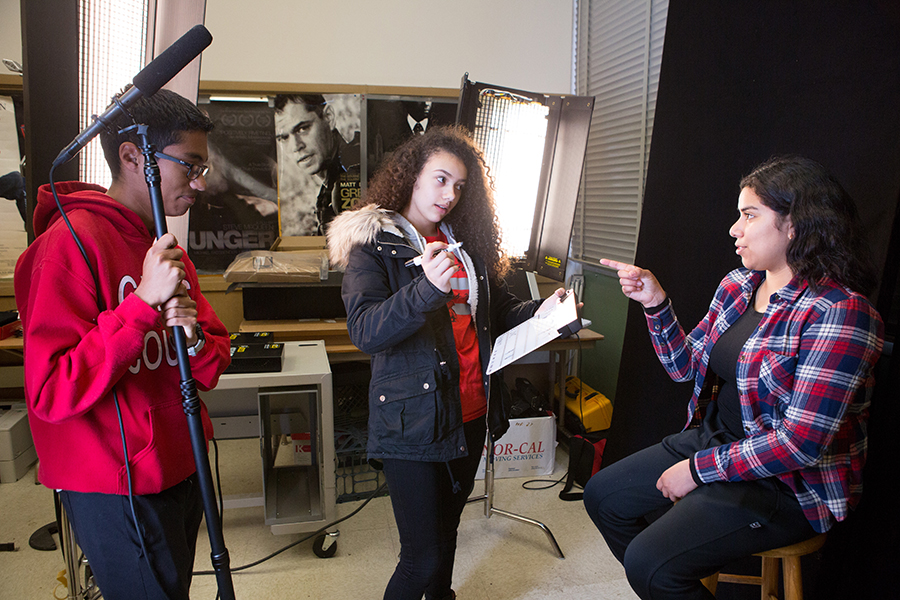
Here in California and across the country, we’re in the middle of midterm elections, and it reminds me of one of my favorite projects. While I was leading Envision Schools, our seniors in their U.S. Government course created 30-second campaign ads for local, state, and national candidates, plus a pro and a con for each of California’s propositions. On the night before the election, parents, grandparents, and community members filled the school auditorium for the premiere. After the screening, students staffed tables in the lobby, answering voters’ questions about the candidates and measures they now knew inside and out.
With AI tools that can now write, polish, and argue a position better than most adults, every school leader is quietly asking the same question: what should students still have to do themselves? Today, students could hand a rough idea to an AI agent and have an ad in minutes. Our Envision students did something no AI tool can do for them.
AI doesn't decide how students learn. Teaching does.
Here’s the obvious pushback: isn’t using AI the real-world skill? Adults use AI at work now, so shouldn’t students learn to make the ad that way, with the tools they’ll actually use on the job? It’s a fair question, and I don’t think the answer is to pretend AI doesn’t exist — learning to use AI well matters. But a student who has never built a persuasive message from scratch can’t evaluate one, whether that comes from a classmate, a campaign, or a chatbot. And one of the largest looks yet at how AI use connects to learning backs that up.
What the research says
That study’s findings, released this fall, are more hopeful than the headlines suggest.
The Organisation for Economic Co-operation and Development’s (OECD) PISA 2025 results included more than 760,000 students, all 15 years old, in 91 countries. Students who used AI to do their schoolwork for them — summarizing texts, researching topics, drafting assignments — scored lower in science than those who didn’t, by about 20 points on average, equivalent to roughly a year of schooling.
But PISA also shows what works. Students who used AI once or twice a week specifically “to help me learn” outperformed all their peers, including those who never used it — AI didn’t cost them anything, as long as it stayed in a learning role rather than a doing-the-work role. And daily AI users scored 13 points higher, more than half a year of learning, when their teachers regularly asked them to evaluate AI-generated information.
PISA shows patterns rather than proving cause, but the pattern is hard to miss: when AI does the thinking, learning drops. When teaching pushes students to question, check, and reason — even about AI’s own output — they thrive. It’s a lot like GPS: if the GPS always provides the directions, you never learn the way home.
AI doesn’t decide how students learn. Teaching does.
That’s what Gold Standard PBL has always done. In a randomized controlled trial of Knowledge in Action, a Project Based Learning approach to Advanced Placement courses, students outperformed their lecture-based peers on AP exams across two years, in two subjects, and for both lower- and higher-income students.
The common thread is who does the thinking. Creating an original campaign ad means researching, scripting, shooting, editing, and defending your choices. No shortcut can replace that work, and it’s why rigorous PBL and well-designed use of AI both get results. They keep students doing the hard, human work of thinking.
What students do that AI can’t
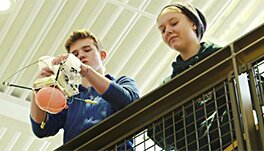
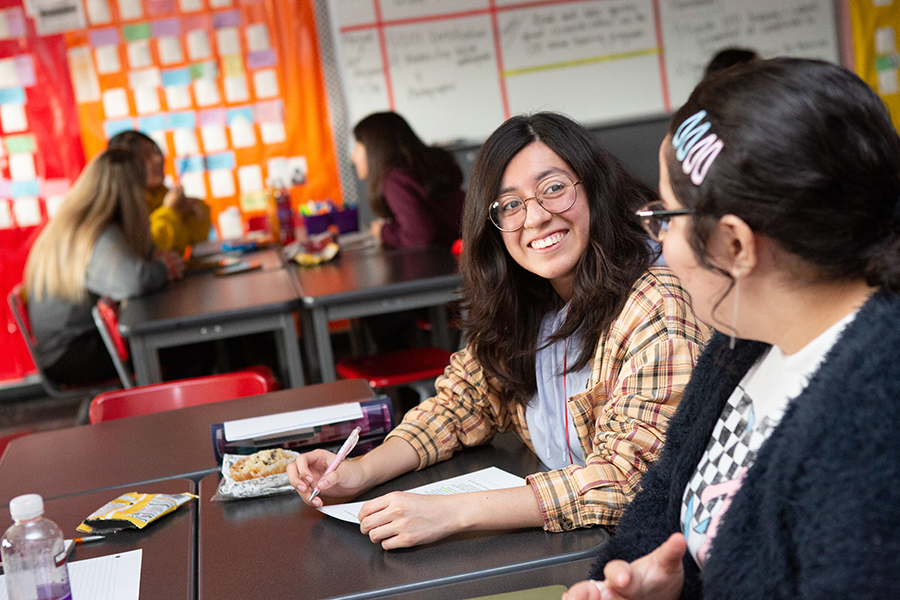
In Gold Standard Project Based Learning, the campaign ad project begins with inquiry: How do you persuade the hearts and minds of a voter? Each student researches an issue and writes a short research paper. Then, working in teams, they establish a position, build a storyboard, write a script, shoot the video, narrate it, and edit it down to 30 seconds.
"I learned that you can lie in a campaign ad, and people will believe you."
—Marcus, student
Think about the choices students make along the way, individually and together: which fact makes the case, which image carries the feeling, which words fit in the last few seconds. If they had used AI to make the ad, they would have skipped all of those learning opportunities and turned their creative choices over to a machine.
One of my favorite moments in the project came at the presentation of learning, when a senior named Marcus was asked what he had learned. He said, “I learned that you can lie in a campaign ad, and people will believe you.” I remember thinking it was the best media literacy project we had ever done, and it was a government class.
Marcus had built a persuasive message from scratch. He knew how persuasion worked, and that made him much harder to fool, whether the future message comes from a campaign or a chatbot.
What students take with them
The students in that auditorium didn’t just learn about elections in the United States. They learned how to research, persuade, create, and question, and how to see through a message designed to fool them. Those are exactly the skills young people need in a world full of AI.
In my experience, three things make a project AI-proof:
An original product.
Students make something that didn’t exist before, not a summary of something that did.
A real audience.
When parents and neighbors fill the seats to see what is created, “good enough” isn’t.
Defending your choices.
Students respond to questions in the moment, explaining why they made each decision, and no chatbot can do that for them.
The research points one way: AI doesn’t decide how students learn. Teaching does. When we give students real problems, real audiences, and the chance to make something original, they rise to it — the same way our seniors did, the same way Marcus did.
That’s the work ahead for every school, not just the ones chasing a headline about AI. The question isn’t whether to use AI. It’s whether we’re still asking them to do the kind of work only a person can do. In an age when AI can produce almost anything in seconds, that may be the most important question in education.
If you would like some support in thinking through what this could look like on your campus, connect with our Strategic Account Executive at [email protected] to discuss how we can help.