



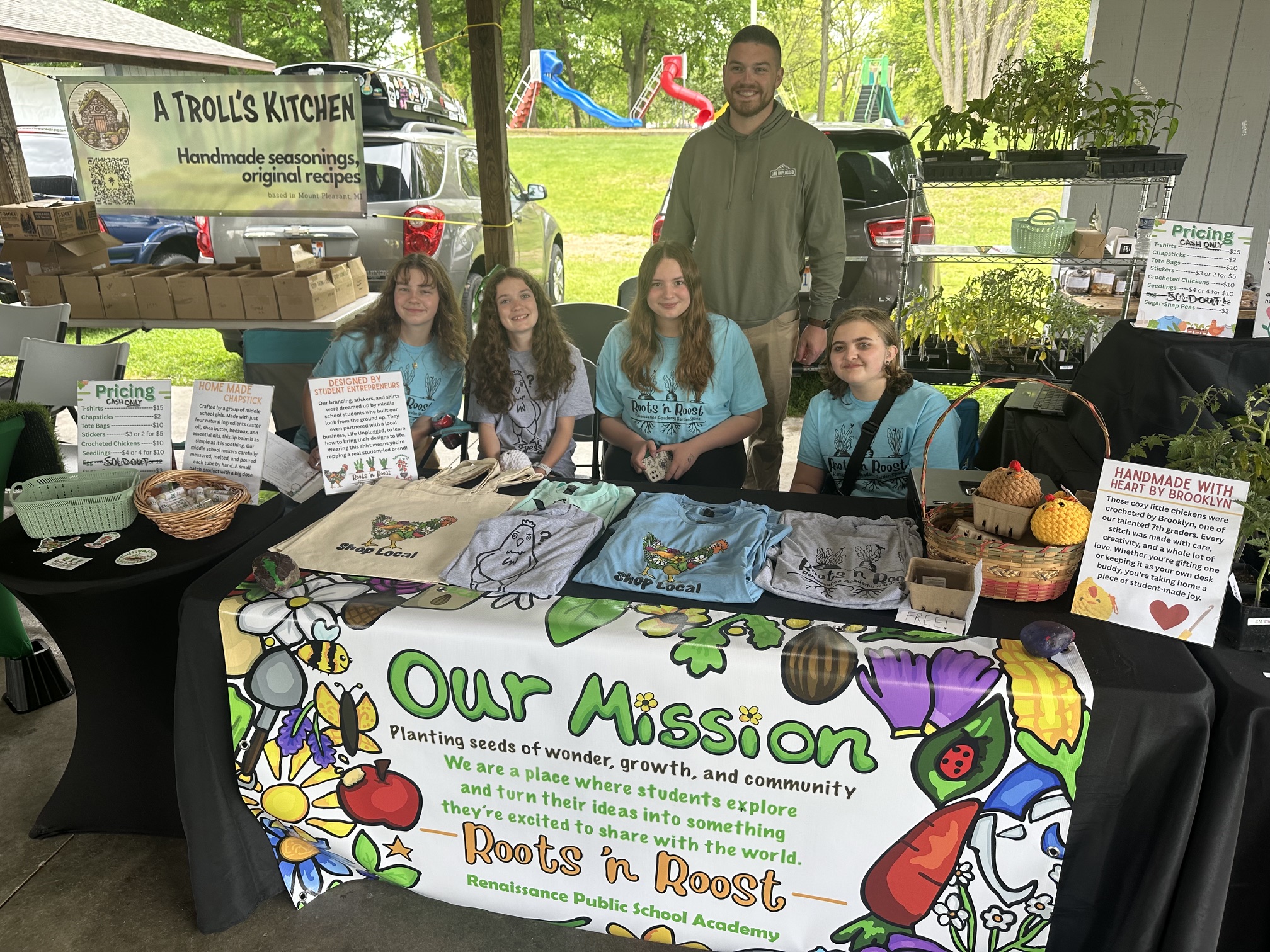
(Part One of this post described student-led projects at Renaissance Public School Academy and their powerful effects on learning. Part Two explains the structures and school culture that underlie PBL.)
The kinds of projects I described in Part One of this post don’t happen by accident. They’re not magic. They happen because the adults in the building believe in this work - and are willing to build the systems to support it.
This kind of learning doesn’t happen in a vacuum. It takes school-wide support, flexibility, and funding. It takes adults who are willing to say yes more often than no. Sometimes that means hopping on a last-minute field trip, making an unplanned purchase, or opening your classroom to a community mentor. Momentum matters, and when student excitement is on fire, you don’t want to be the one holding the extinguisher.
We’re lucky to have a community connections liaison: someone whose job it is to help us find partnerships, places, and people that can make student work feel real. We’re lucky to have administrators who truly believe in the work we are doing and go out of their way to support it.
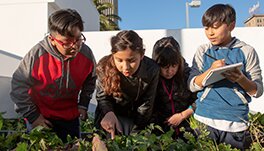
But just as important as our structure is our culture. Because you can build the most brilliant project plan in the world, but if your school isn’t willing to lean into the mess of it all, it won’t work. Project-based learning is messy - like a garden bed in late summer.
Tangled and overgrown. Beautiful in ways you didn’t plan for - but alive.
We’ve had projects completely flop. We’ve had others blow past every expectation we had. And most of the time, we live in the unpredictable middle.
But the key is: we’re not afraid to try.
And look… we’ve also had moments of total chaos. We’ve lost whole vegetable crops to aphids, or sprayed the wrong concentration of product on our entire garden, killing almost everything - including the plants. We have ruined more carpets with spilled paint than I’m willing to talk about. We’ve run over irrigation lines that shut down all the water to our hoop house for an entire week - in the middle of our busiest growing season. Students were so tired of bucketing water out there each day that I started giving out king-sized candy bars just to keep morale high.
Project-based learning is messy - like a garden bed in late summer. Tangled and overgrown. Beautiful in ways you didn’t plan for - but alive.
We’ve also had the product of our student learning play out completely differently than we had planned - our Civil War Board Games unit comes to mind. As my teaching partner, Dave, and I sat there together after school trying out the games that had almost nothing to do with the Civil War, all we could do was laugh at how poorly we must have designed that unit. And you know what? Our students still learned and built some very creative products, despite the fact that we still had so much to learn about PBL unit design back then! We learned from it, reinvented that unit into something completely different, and are better now because of those failures.
We design experiences that are meaningful. But we also build a culture that can hold the weight of risk, reflection, and reinvention - because that’s where the growth happens. In our students. And in us.
Under the Hood: The systems that power meaningful PBL
Project Based Learning isn’t magic. It’s mechanics. And when the systems are strong, students can build work that’s bold, messy, meaningful, and entirely their own. When done well, PBL can look effortless from the outside: students leading, solving, building something unforgettable. But underneath the magic, there’s structure. Purposeful, intentional design. Here’s what makes it all run at our school:
| Structure | What it Looks Like in Practice |
| Real-World Framing | Projects start with an authentic role - designer, entrepreneur, curator, lawyer, engineer - not a school-made simulation. Students do the work of the world. |
| Student Roles with Purpose | Every student owns a job: project manager, creative director, builder, outreach lead. Roles evolve as the project grows. Leadership and communication are expected. |
| Flexible Scheduling | Blocked build time. Living calendars. Momentum-based pacing. The work drives the schedule - not the other way around. |
| Visible Systems | Project walls, job charts, timelines, and task trackers help students manage their workflow and hold each other accountable. |
| Feedback & Iteration Loops | Revision is expected. Peer critique, soft launches, expert input, and do-overs are part of the culture - not the exception. |
| Authentic Audience | The work is meant to be seen. Customers, juries, parents, professionals, or the public - there’s always an authentic audience who will have eyes on the work. |
| Organized Chaos Tools | Clipboards. Spreadsheets. Checklists. Sticky notes. Students manage complexity instead of being protected from it. |
| A Culture That Says "Yes" | Behind it all is a team of adults who trust students, create space for the mess, and say “yes” more than “no.” |
Let Them Drive the Bus
So yes, it’s messy. Sometimes it breaks. Sometimes it blooms. But through all of it, one thing has never changed: our trust in our students.
At the heart of all of this is trust. Trust that our students can do hard things. Trust that their ideas are good ones. Trust that if we give them the wheel, they’ll drive the bus better than we ever could have imagined.
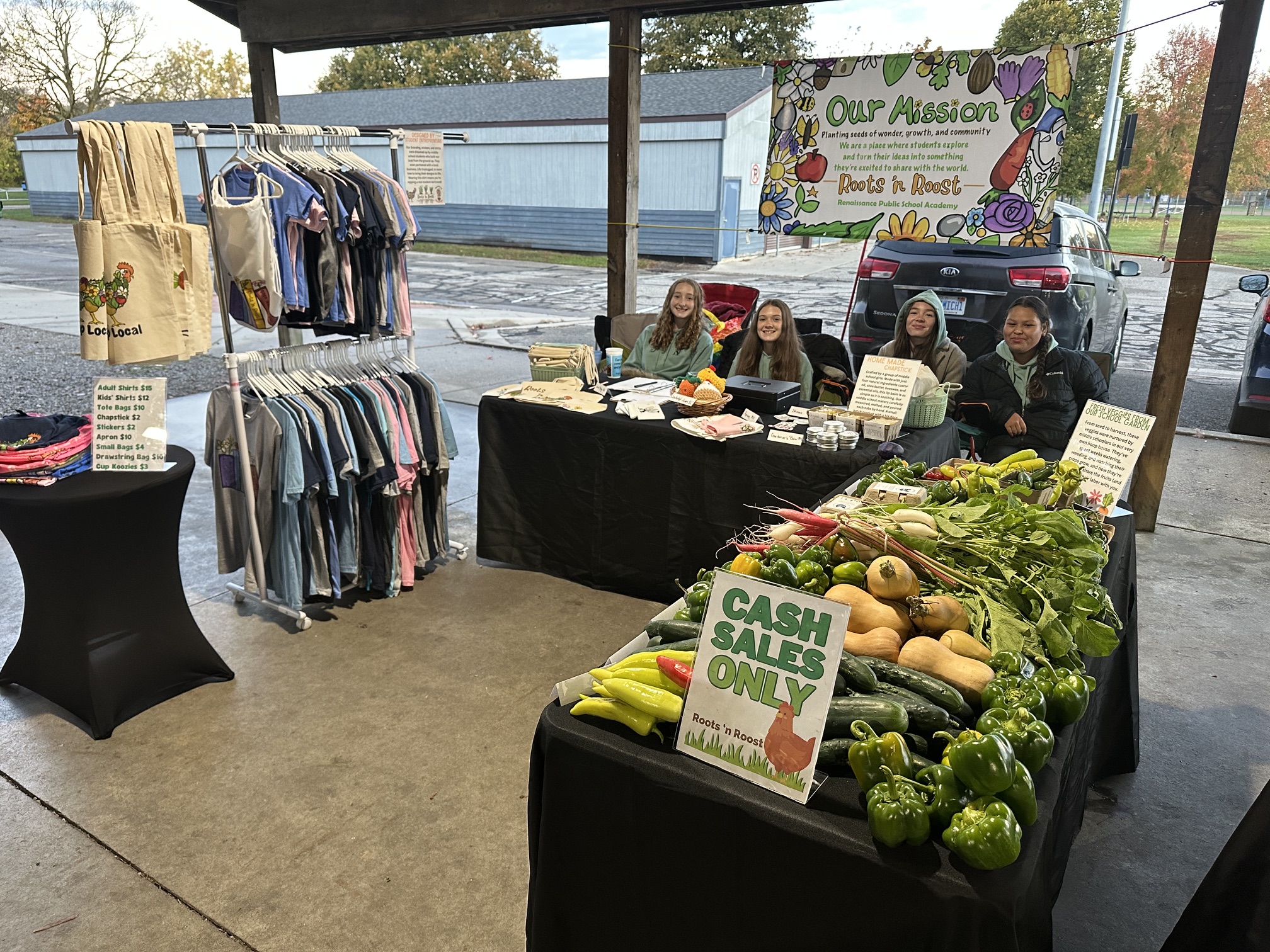
Because when students are given real work to do, and a real reason to do it, they show up. Fully. They lead. They build. They collaborate. They solve.
And they walk away knowing that they built something real. And that it mattered.
And that’s exactly the feeling we want them to leave school with - again and again and again.
How to Start - Or Go Bigger
So if you're sitting there wondering how to start - here’s my advice.
If you’re just beginning with project-based learning:
Start small, but start now. Involve students in the planning. Create a real audience. And say yes to their ideas, even if you’re not totally ready. You don’t need to have it all figured out. You just need to be brave enough to begin - and trust that your students will meet you there.
And if you’re already doing PBL? Go bigger:
Push the boundaries. Invite in real professionals. Raise the pressure in ways that matter. Rethink the pacing, the audience, and the product to make it meaningful for your students. Let them take on more than you’re used to. You don’t have to let go of everything - just enough for students to know they’re the ones behind the wheel.
So don’t be afraid to hand it over. Because when we let them drive the bus… they take us places we never could have imagined.
This is part two in a two-part blog series. The first part, "Real Work, Real Growth: What Happens When Students Take The Wheel" published on November 17, 2026.