


Over the course of the past couple of school years, I’ve seen my students step into some remarkable roles.
One eighth grader greeted a customer at our farmers market booth and explained how their brand started with student-created designs uploaded to a print-on-demand site - and how everything changed after a last-minute field trip to meet a mentor from a local business called Life Unplugged. She described how they realized they could make a much bigger impact - and better margins - by ordering vinyl transfers, bulk apparel, and investing in their own heat press. That one afternoon lit a fire. They came back, ran the numbers, and decided to pivot - producing every shirt by hand, in-house, before the next market day. It was bold, messy, and completely theirs.
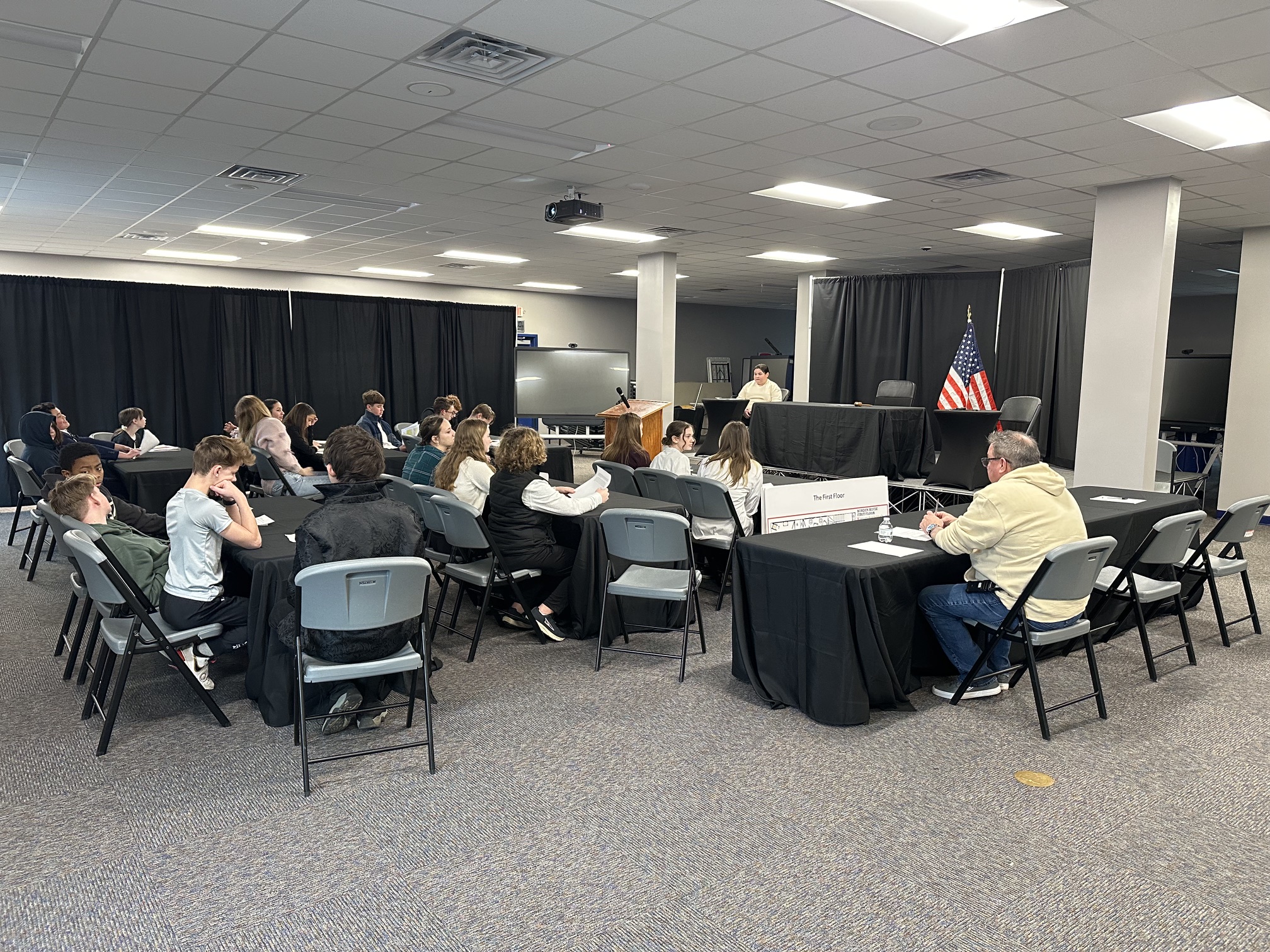
These same students, along with others, also spent weeks preparing legal arguments for our Lizzie Borden trial and stood in front of a jury to deliver them with real conviction.
And on the night of our Humanities Museum Exhibition, I stood back and watched as the room filled with families and community members. Our students had fully transformed the space. They built exhibits, wrote signage, and curated artifacts. They welcomed guests, passed out programs, and took pride in the way it all came together.
"A worksheet doesn’t build them. A test doesn’t stretch them. But a 400-square-foot Paleolithic cave filled with replica cave art — built with full student ownership and responsibility — does.”
One of our early mentors - the museum coordinator from Central Michigan University - walked through the final exhibit after coaching students months earlier. And the look on her face, like so many others that evening, said it all: they weren’t expecting this. They weren’t expecting something so developed, so immersive, and so professional.
These moments didn’t happen because we told students what to do. They happened because we created the kind of environment where students could lead, solve problems, and shine. And that starts with a belief: that school should actually feel like real life, not just preparation for it.
Raising the Stakes, Raising the Bar
I teach middle school at Renaissance Public School Academy, a project-based public charter in Michigan. We believe students deserve learning experiences that make them feel proud, nervous, excited, and deeply engaged - the way real work feels. In our classrooms, students get to flex the muscles that make people successful in the real world: collaboration, critical thinking, creativity, time management, conflict resolution - and presentation skills.
We give our students opportunities to present early, often, and over and over again. We start when they’re young - when the stakes are low, and the audience is safe. In lower elementary, they share their ideas in front of peers. As they grow, we raise the stakes: they present to families, to community members, to local reporters, and on the radio. Because when kids learn to speak with confidence now - when they’re supported, believed in, and encouraged - they carry that confidence with them for life.
And just like muscles, those skills don’t grow without resistance. A worksheet doesn’t build them. A test doesn’t stretch them. But a 400-square-foot Paleolithic cave filled with replica cave art - built with full student ownership and responsibility - does.
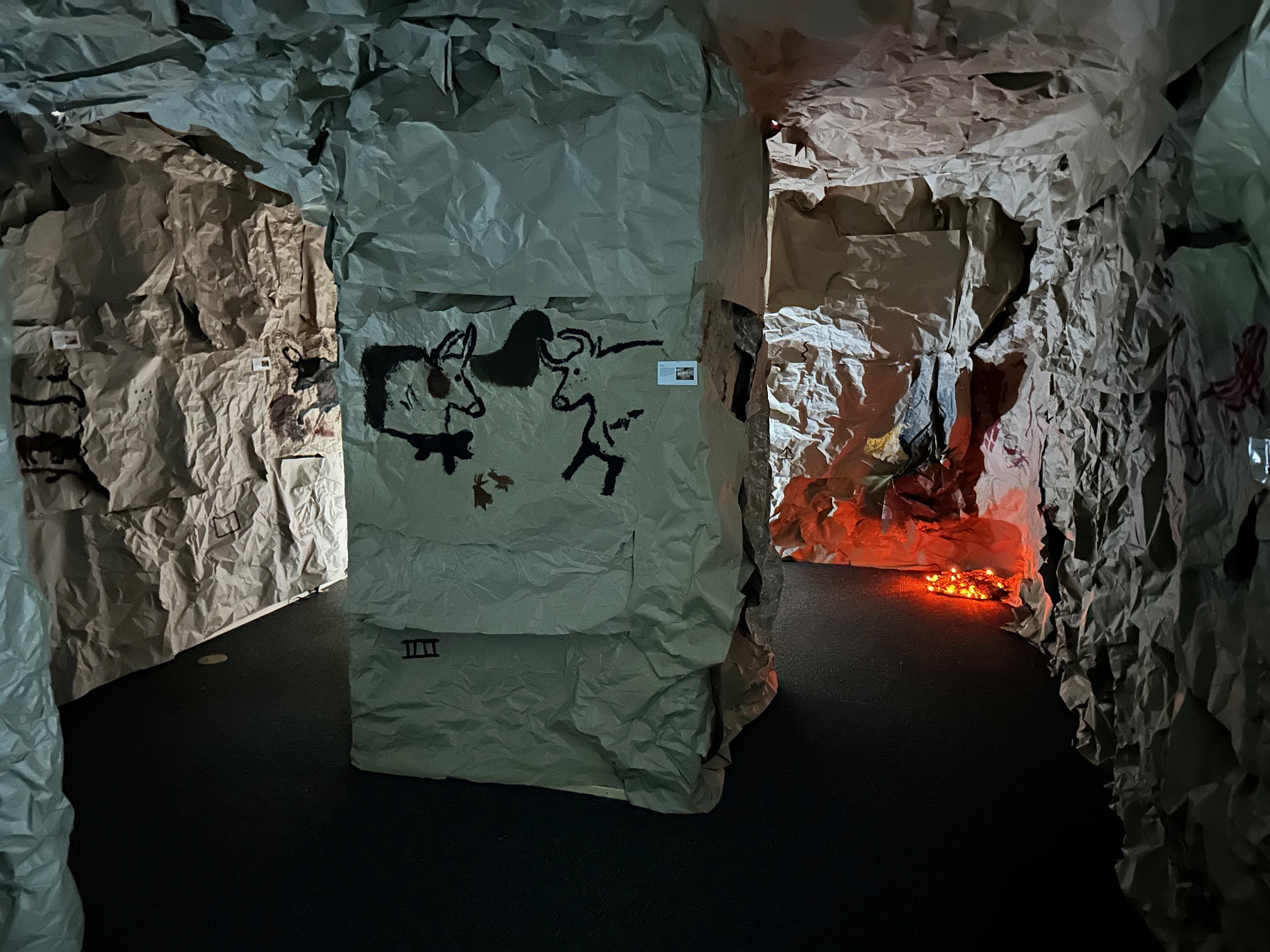
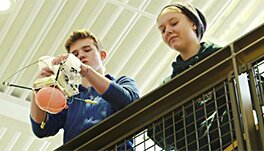
And it wasn’t just a cave that they built. This year, our students transformed our entire presentation space into a museum for the exhibition I mentioned earlier. They dreamed up and constructed a massive ziggurat, an 8-foot-tall Roman aqueduct, a 12-foot Egyptian pyramid, and a walk-in replica of the Indus Valley’s Great Bath. They pieced together a section of the Great Wall of China and curated hundreds of original artifacts spanning the Paleolithic era to the River Valley civilizations. And they didn’t just build these things - they managed the whole process.
Our student directors led the planning, oversaw the after-school construction sessions, and created professional-quality signage to tie the entire exhibit together. So in addition to learning world history standards, students exercised their creativity, critical thinking, and publishing skills, as well as developing collaboration and communication skills.
Why were the students so dedicated? Because there was an audience. A real one. Families, community members, local leaders - they were coming. And when the stakes are real, students rise.
When They Surprise You
Think for a moment about the last time a student truly surprised you with what they were capable of. What were the conditions that allowed that to happen? What role did you play in making that space possible?
These reflections are important, because they connect us to our own purpose - and remind us that transformation doesn’t happen by accident. It happens because a teacher who intentionally creates a classroom culture of learning, student ownership, and innovation sets students up to push boundaries and surprise us in amazing ways.
When students are trusted with real responsibility, the results aren’t always perfect - but they are real. They’re powerful.
Pressure with Purpose
Deadlines suddenly matter when your product is going to be sold to strangers. Conflict resolution becomes real when your team can’t finish the pyramid unless you all get back on track. Time management becomes personal when your booth at the farmer’s market opens in two days and your inventory is still just a sketchbook and an idea.
These are the kinds of experiences that leave students walking away thinking: “That was hard… but we rose to the occasion and we did it.”
Last year, our students wrote and produced a full-length play about the founding of our nation. Just days before our performance, some were still memorizing lines, figuring out set changes, and finalizing blocking. The pressure was real - and so was the fear of not being ready. But that pressure drove some of the most focused, committed, and collaborative work we saw all year. Because it was real. And it mattered.
We also turned our school into a courthouse for a trial of Lizzie Borden this year. After weeks of research and argument-building, our students stepped into character as attorneys, jurors, and witnesses. And when they took the stage - nervous, dressed up and with their case documents in hand - it felt authentic. The energy in the room was electric.
These real-world pressures help students grow. But they also do something just as important - they help students discover who they are and what they want to be.
Middle School is a Dress Rehearsal
Middle school is the perfect time to explore identity, to try on different versions of who you might become. These past two years, our students have been lawyers, historians, videographers, authors, engineers, performers, archaeologists, and entrepreneurs.
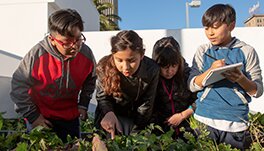
They’ve written and illustrated children’s books. They’ve created short documentaries. They’ve launched real businesses and marketed their own brands. They’ve tested different ingredients in handmade chapstick, planted and harvested kale, tomatoes, and peppers in a student-built hoop house, and figured out how to heat-press t-shirts with a logo they designed themselves.
That’s not extra. That’s the curriculum.
These are not hypothetical simulations of the future. These are real experiences that help students figure out who they are, what they care about, and what it feels like to do something meaningful.
This is part one in a two-part blog series. The second part, "Real Work, Real Growth: The School Culture and Systems That Carry It" will publish next week.