

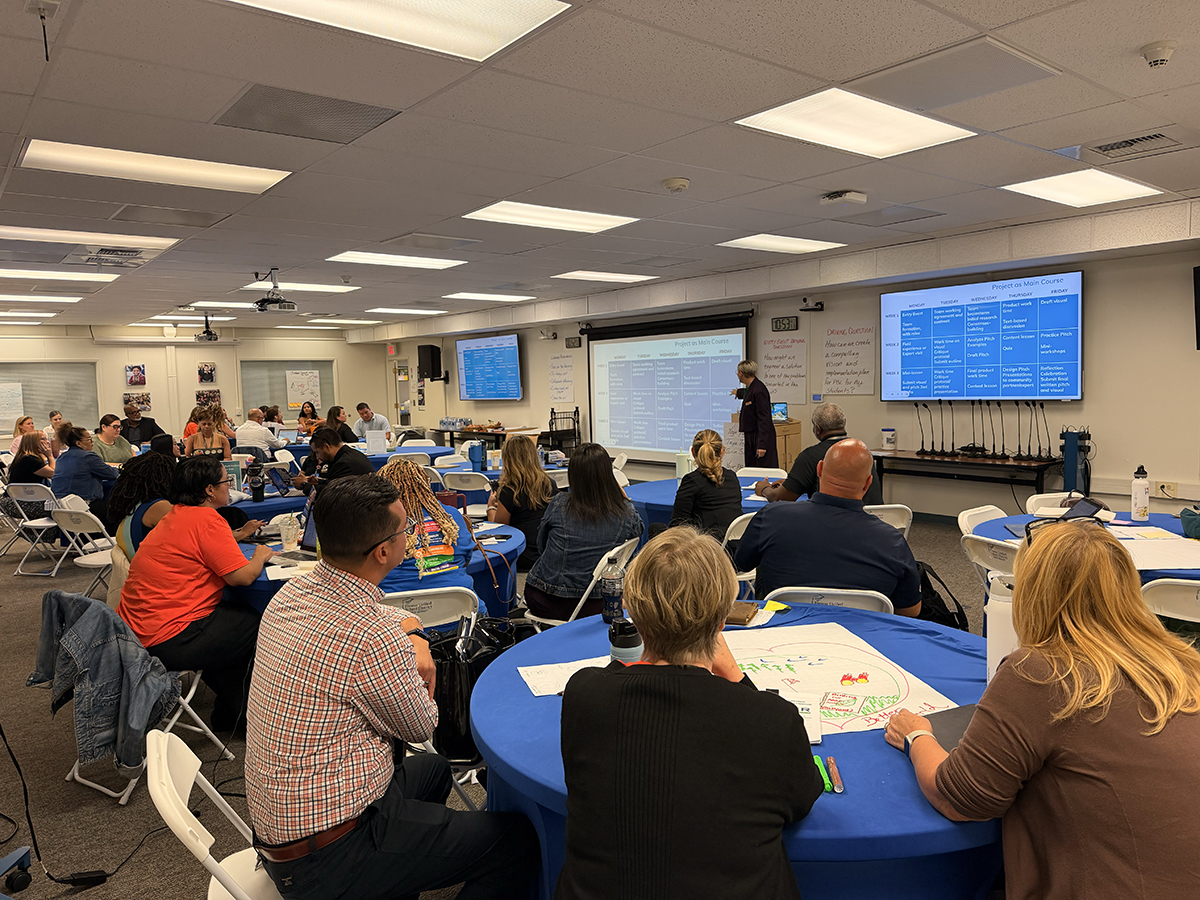
Recently, PBLWorks launched a new partnership with Fresno Unified School District to bring Project Based Learning to every student in service of the district’s newly created Portrait of a Learner. My colleague Erin Sanchez and I had the opportunity to hear Dr. Carlos Castillo, the district’s Chief Academic Officer, ask a room full of education leaders to consider a simple question: What are your greatest hopes for young people—both your own children and the students you serve?
The answers were telling. Leaders hoped young people would live good, happy, and healthy lives. They wanted them to be resilient, confident, curious, agile, inspired, and able to find purpose. They talked about opportunities, inspiring others, and embracing a broad definition of success.
Dr. Castillo then named the tension: our aspirations for students extend far beyond proficiency, yet proficiency remains one of the primary ways we define and measure success.
Academic proficiency matters deeply. We want every student to develop the knowledge and skills they need to read, write, reason mathematically, understand the world around them, and continue learning. At the same time, proficiency alone does not represent the full vision we have for young people.
That leaves those of us working to transform teaching and learning with an important question: Are the learning experiences we provide students and the ways we define and measure their success aligned with who we actually hope they will become?
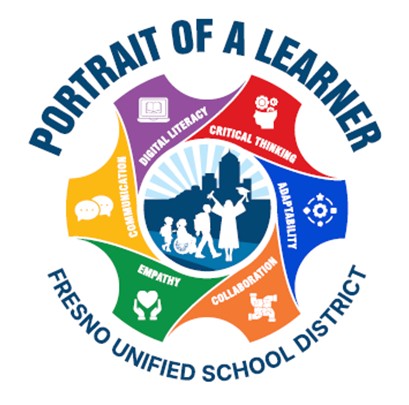
Increasingly, school systems and their communities have made that broader vision explicit by creating a Portrait of a Graduate or Learner. These Portraits articulate not only what students should know, but what they should be able to do with that knowledge and the competencies and dispositions they will need beyond school.
The challenge is that we have expanded our definition of student success, while the systems designed to develop and measure that success have not always kept pace.
A Coherence Problem
Even in communities that have developed strong, community-driven Portraits, there can be a disconnect between the aspirations represented in the Portrait and what students experience every day.
Our Portrait might say we want students to be adaptable, collaborative, effective communicators, critical thinkers, and problem solvers. Meanwhile, our goals and benchmarks may remain focused primarily on content proficiency, standards, and reading comprehension.
All of those things matter. The question is whether the system is designed to achieve the full set of outcomes we say we value.
Have we designed instruction so students regularly have opportunities to develop and demonstrate Portrait competencies?
Have our assessments evolved so students can demonstrate them?
And perhaps most challenging: Have the metrics and goals we use to evaluate school and district success evolved alongside our definition of student success?
Too often, the answer is: not yet.
This is a coherence problem. We have broadened our aspirations for students without always making corresponding shifts in the structures around teaching and learning. If our Portrait represents our definition of student success, it can’t sit alongside our instructional model, assessment system, and strategic goals. It has to shape them.
Learning Must Align With the Vision
Changing every measure of school success won’t happen overnight. There is, however, a place where we can begin closing this gap now: the learning experiences we design for students.
We cannot simply describe who we hope students become. The competencies in our Portraits aren’t developed simply by naming them. We have to design the experiences that allow students to become those people. For example, students develop:
- Resilience when they encounter something challenging, persist, learn from setbacks, receive feedback, and try again.
- Adaptability when something doesn’t go according to plan and they have to determine a new way forward.
- Collaboration by doing meaningful work with other people—contributing ideas, navigating differences, listening, compromising, and sharing responsibility.
- Effective communication skills when they have something meaningful to communicate and an authentic reason to communicate it.
- Agency when they have opportunities to make real decisions about their learning and their work.
PBL as a Path to Proficiency—and Beyond
This is where Project Based Learning can play an important role.
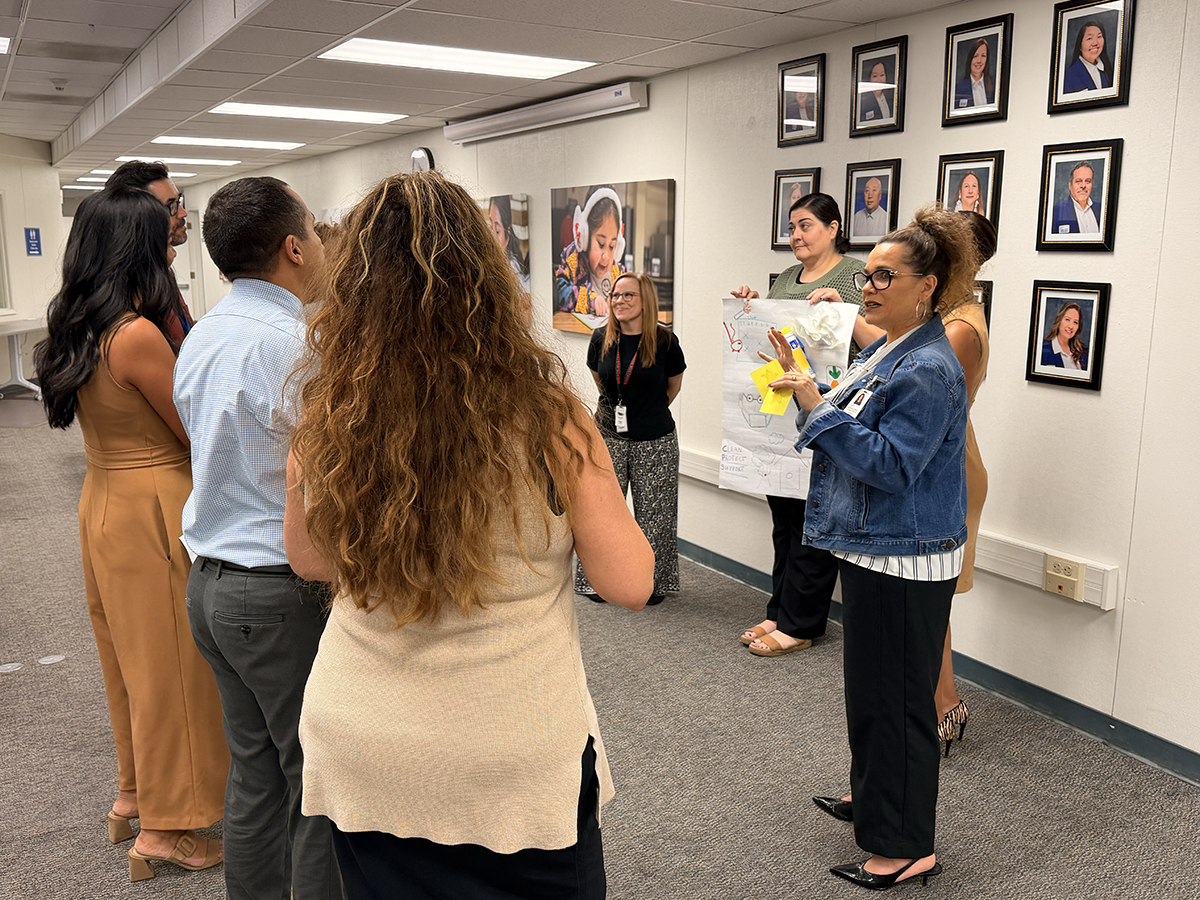
PBL should not become another initiative sitting alongside a district’s Portrait of a Learner. Done well, it can be a pathway for bringing that Portrait to life in classrooms for all students.
In Gold Standard PBL, students build important academic knowledge, understanding, and success skills through learning experiences that ask them to investigate complex questions, make decisions, collaborate with others, respond to feedback, revise their thinking and work, communicate with authentic audiences, and reflect on their learning.
The connections are powerful.
Through sustained inquiry, students ask questions, find and evaluate resources, apply information, and determine what they need to know next.
Through student voice and choice, they make meaningful decisions and take greater ownership of their learning.
Through critique and revision, they learn to give and receive feedback, persist, adapt, and improve their work.
Through a public product, students communicate their learning beyond the classroom, creating an authentic purpose and audience for their work.
And through reflection, students consider not only what they are learning, but how they are learning and how they are growing as learners.
The power isn’t simply that PBL aligns with the competencies in a Portrait. It’s that PBL creates authentic opportunities for students to develop and demonstrate those competencies while building rigorous academic knowledge and skills.
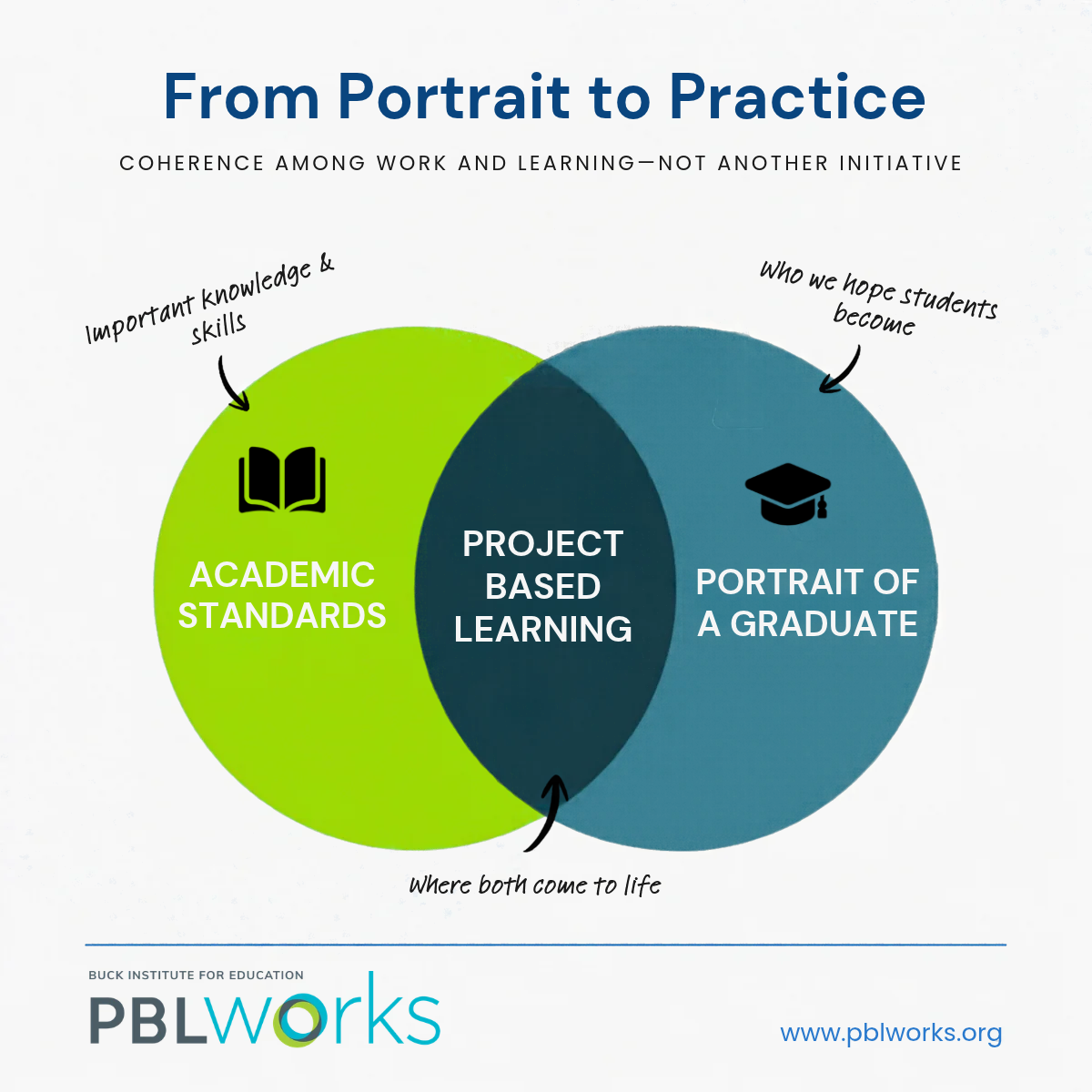
From Portrait to Practice
For district and school leaders, this isn’t about adding another initiative. It is about creating coherence among work that may already be happening.
→ Academic standards define important knowledge and skills.
→ Our Portrait describes the graduates we hope young people become.
→ Project Based Learning creates opportunities for students to develop both.
Our instructional practices, assessments, and measures of success should increasingly reflect that same vision.
I keep coming back to the question that started the conversation in Fresno: What are our greatest hopes for young people? Our answers tell us something important about how we really define student success.
Portraits of a Graduate can capture those aspirations. If we are serious about realizing them, students need learning experiences that will make those aspirations a reality.
If you would like some support in thinking through what this could look like on your campus, connect with our Strategic Account Executive at [email protected] to discuss how we can help.