






You’ve provided PBLWorks training for your teachers and they are making plans to implement projects this year. As the school leader team, you’re supporting the effort by creating a PBL unit calendar, reviewing project plans, and continuing to advocate for an interactive and reflective approach to the work.
While those steps are crucial in bringing Project Based Learning experiences to students in a strategic and sustainable way, consider how you can also repurpose familiar practices to help ensure the success of PBL at your school. For example, a useful structure that is likely already in place is the classroom walkthrough.
Classroom walkthroughs are a powerful tool you likely already have in place. They can help improve instructional practices and help communicate expectations to teachers. When implementing PBL, they are useful for:
Gold Standard PBL calibration
“We know it’s good when we see it.” Walkthroughs help your team build a shared understanding of what high-quality PBL looks like.
Inform instructional leadership
“We know what to work on next.” Walkthroughs can help identify ways to improve PBL design and teaching practices.
Reinforce expectations
“We’re confident in your ability to implement PBL, and we’re intentional about our support.” Walkthroughs communicate high expectations alongside a collaborative spirit.
Calibrate and Observe
While educators know good teaching when they see it, there are multiple facets of high-quality classroom instruction. The practice of classroom observations — using a shared set of criteria and a predictable debrief structure — builds your team’s instructional eye. Looking for the same things ensures consistency of messaging and coherence of coaching support. It also builds the team’s capacity for gathering observation data and supporting all conclusions with observable evidence.
Below is our simple, yet tried-and-true process for observing classrooms where teachers are growing their PBL practice:
Step 1 | Meet with your leadership/observation team to agree on what evidence you'll be looking for. Use the Essential Gold Standard Design Elements and PBL Teaching Practices to narrow down a specific, shared focus. |
Step 2 | Plan and communicate your observation schedule, focus, and intent to teachers. Early on, this is about growing together, so be clear in your messaging that this isn’t about evaluating what’s happening, it’s to learn how to see evidence of PBL happening. Being clear that this is about your own learning — how to lead PBL implementation — will lower the anxiety teachers may feel about being observed. |
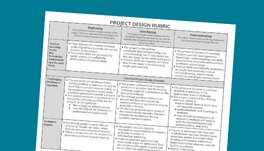
Step 3 | Practice using PBLWorks rubrics by analyzing PBLWorks project videos on YouTube or in the PBL Project Library to agree on possible observable evidence. |
Step 4 | Conduct the observations. We suggest short rounds of 15 minutes per classroom, with 8-10 minutes spent observing instruction and interacting with students if appropriate. |
Step 5 | Engage in a short hallway chat to share what you saw that you liked. Capture all “glows” to share back with the teacher and use that information to identify trends for coaching and professional development. You can even consider leaving your teachers a "love note" outlining these positive areas. Note your “grows” to discuss privately later; calibrate your team’s vision for success. |
Debrief to Amplify and Improve
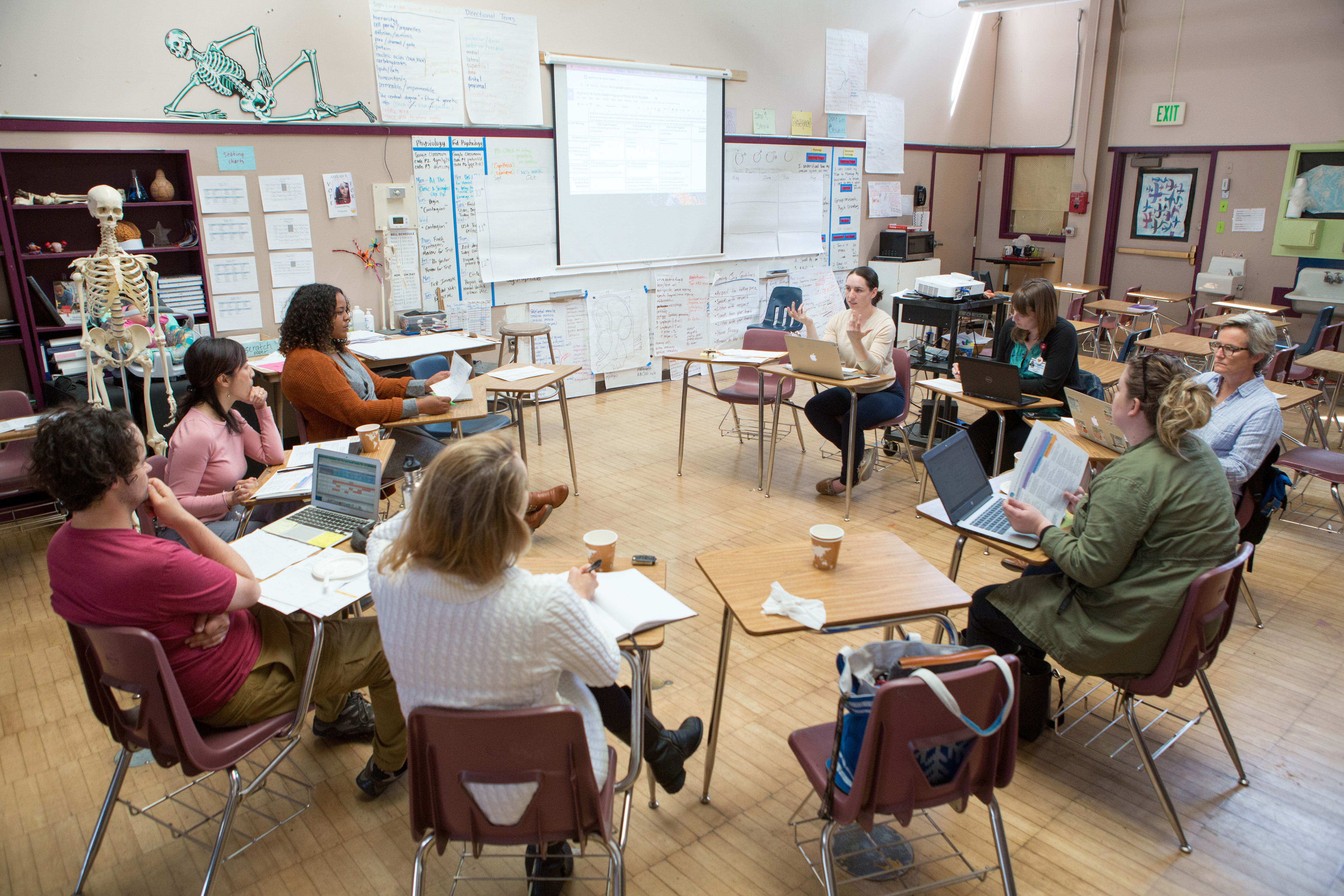
After seeing the work in action and gathering qualitative and quantitative data, debrief all of the observations to identify specific successes and the teacher moves that contributed to those successes, as well as the most impactful area for improvement.
This is a place where some disagreement may surface, at least initially. Calibrating across the team is key; sharing too many action steps, or sequencing them poorly, can stall rather than accelerate teacher growth. When in doubt about what to prioritize, ask which action step would have the greatest impact on student learning — the greater the impact, the greater the priority.
Start the process by identifying successes, in alignment with the observation rubric, and identify what contributed to those successes. That sharing can be followed by naming the areas of opportunity for growth, also in alignment with the observation rubric, and agreeing on the action step that would best support that gap. By sharing successes first, you both reinforce an asset-based approach and lean into replicating what's working.
Reinforce Expectations
You may have heard the leadership adage “inspect what you expect,” but that is easier said than done with a to-do list that is often expansive. Classroom observations conducted during PBL facilitation implicitly send the message that this work is important and that you are in it together - you demonstrate what you value by where you spend your time!
Make sure teachers understand that this is not a formal evaluation with a lengthy checklist and a district form; it is a way for all parties to learn and grow together so that the student experiences and outcomes continue to level up. The positive feedback and collaborative structure will also help teachers feel that failing forward is not only accepted but encouraged, and it serves as a springboard for reflection and refinement.
If you already have a predictable structure for classroom walkthroughs, strategize on how to leverage that structure specifically for PBL. If you don’t yet have something in place, don’t wait — put a recurring date on the calendar, at least every two weeks, for classroom walkthroughs in service of your instructional leadership.
You don’t need to reinvent the wheel. It’s about taking a critical look at the structures you already have in place and figuring out how to optimize them to support what really matters: a strong instructional culture where teacher celebration and growth is prioritized and student engagement and achievement are the shared destination!
If you would like some support in thinking through what this could look like on your campus, connect with our Strategic Account Executive at [email protected] to discuss how we can help.