





Making the “Messy Middle” of a Project Public
So often, when we celebrate the outcomes of Project Based Learning, we tend to lean on the final public products or presentations. While it is incredible to witness an authentic public experience or event, in order for an audience to truly appreciate the power of PBL, we need to share the process along the way. When we make the learning process visible and share the thinking, revisions, collaboration, and problem solving that happen along the way, it becomes clear that the experience is much more than just “doing a project.”
Recently, I wondered what it would look like to go public with the process, to invite community members into a school so they might have a glimpse into organic PBL pedagogy. Perhaps this would illustrate more clearly the difference between dessert projects and main course learning experiences.
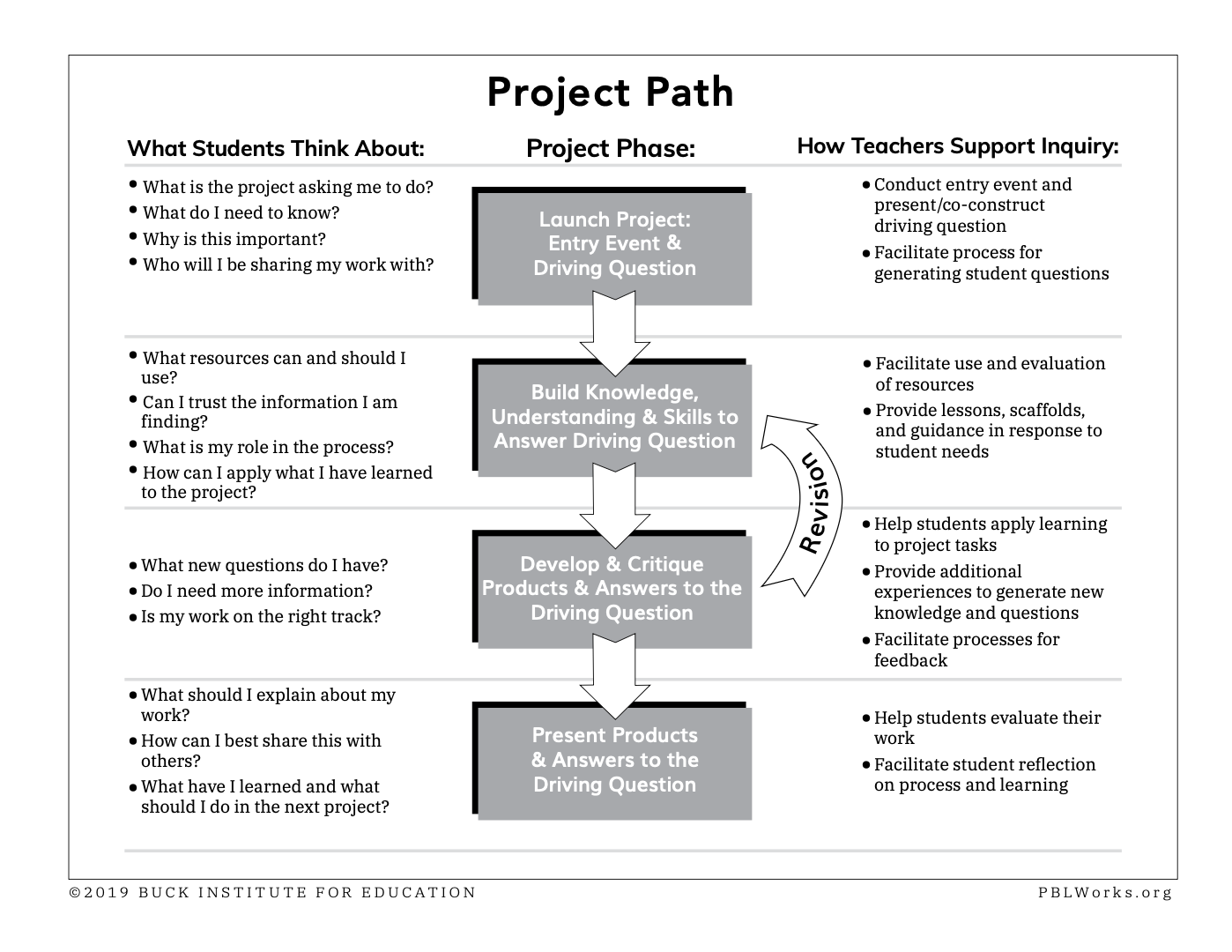
Or, it might answer a prominent question that arises during PBL training: “What does it look like when students and teachers are in the throes of a project?” I figured an exhibition of “process” might be one way to bring the PBL Project Path to life, to put on display the moves teachers and students make at all stages of a project.
Preparing for the Exhibition
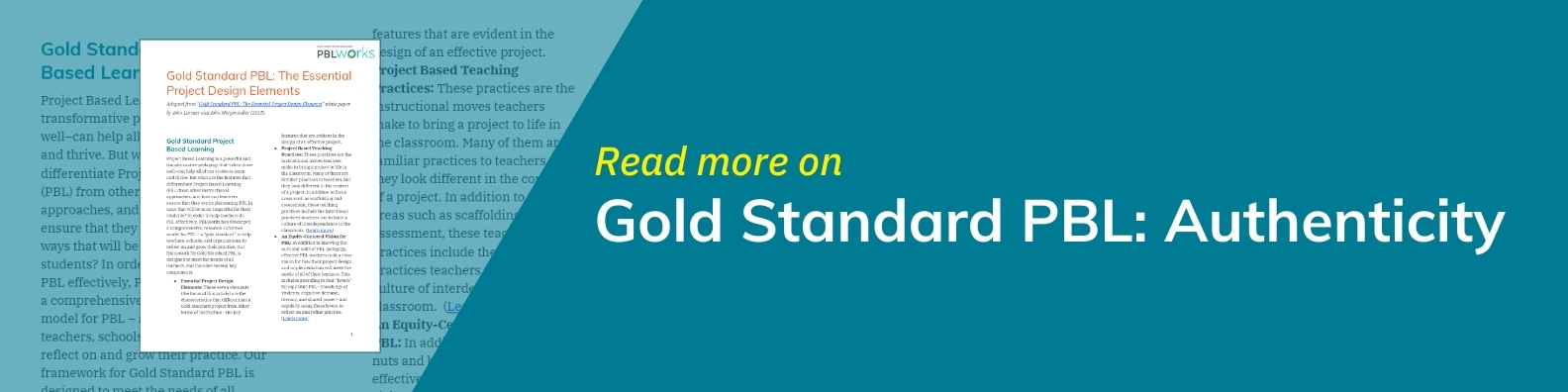
Over the last few years, I have been coaching teachers and administrators at our New Tech Network schools, Innovation Tech and Seven Valleys New Tech Academy. This year, we’ve been focused on the importance of authenticity when engaged in Gold Standard PBL.

As we explored authenticity in PBL, we spent time in coaching sessions noticing how the PBL Project Path showed up daily in their classrooms. What was happening during the launch of a project? How were teachers facilitating thinking routines as students worked on answering the driving question while creating the public products? We also realized… How cool would it be if people on the outside could see all of it: the inquiry, discussions, collaboration, all of the parts that make a PBL learning culture?
So, as an extension to the staff’s learning about the PBL process, the administrators and I asked them if we could invite the schools’ advisory boards in to see the day-to-day along the project path. There was some trepidation, because sometimes learning is messy, hence the term “messy middle” within the project path. We discussed the importance of teaching our visitors about the Project Path that leads students to an authentic product.
 Preparation for the Exhibition of Process began. We also explained to the students that this was a part of staff professional learning around PBL. While this exhibition was a tool for teacher professional development, it’s important to note that students too could lead this process as a reflective learning opportunity around what they experience while engaged in PBL.
Over the next few weeks, coaching sessions consisted of teachers telling me which project they were facilitating as well as where they envisioned they would be along the Project Path on the day of the Exhibition. Perhaps they would be in the launch, facilitating the need to know process or creating team norms and working agreements. Some classrooms would be building knowledge to answer the driving question, so visitors might recognize literacy and research strategies. Or perhaps students would be in the process of gathering information from an expert in the field. And, if the visitors walk in during the development/critique phase, they might witness a tuning protocol between student groups. During our coaching sessions, we would pull out the PBLWorks Strategy Guides to inform our work around process or deepen understanding of strategies and protocols so teachers could highlight them during the visits.
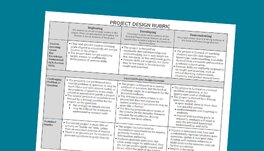
Before the exhibition, the administrators and I created an overview to share with advisory boards on the day of the exhibition. Before going into classrooms, our visitors would learn about the PBL Project Path along with thinking routines that occur at each stage. Observers would carry with them a feedback tool co-designed by teachers with a focus on authenticity. There was space for them to jot likes and wonders as well as how they might offer support along the way, should real-life members of the community wish to help make the project a richer, more relevant experience. It’s important that the feedback tool aligns with Gold Standard PBL Project Design Elements and Teaching Practices–the rubrics for them could be quite helpful in identifying specific indicators for observers to look for.
Exhibition Day
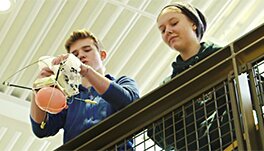
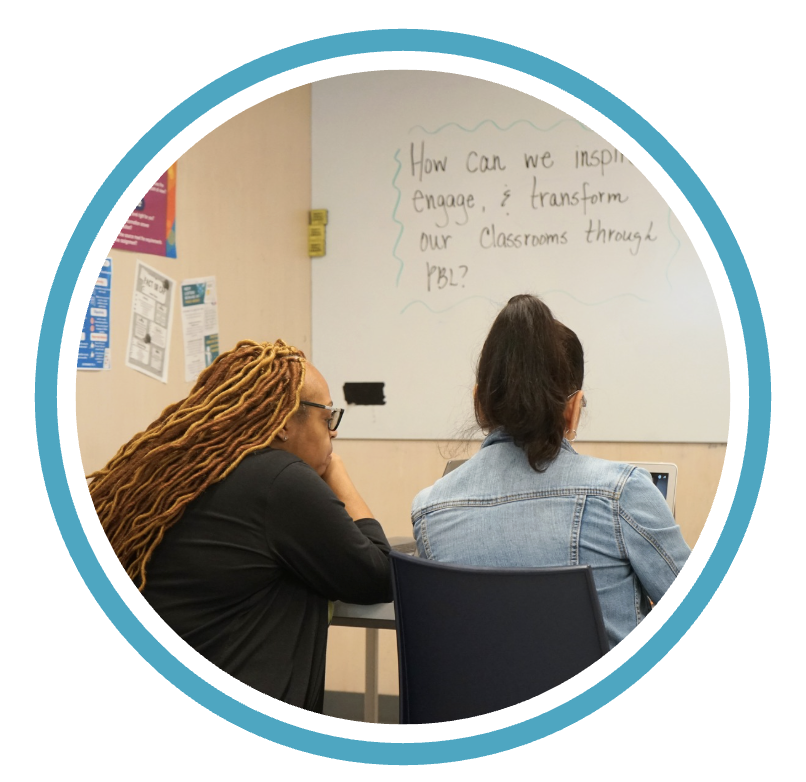
On the day of the exhibition, community members spent an hour familiarizing themselves with the PBL Project Path, thinking routines toolbox, and the feedback tool before heading in to visit classrooms. Small groups visited two classrooms, where they would be met at the door by student docents who would share the name of the current project, the driving question and where on the project path the class was. Then, they would enter the room, perhaps just to observe, or to take part in a strategy, protocol or thinking routine.
After viewing various stages of the Project Path, the community members reconvened to reflect on what they observed. After some conversation, the visitors turned in the feedback tool so teachers could reflect on the observations or perhaps invite the community members in to be a part of future learning. The participants and the teachers appreciated the opportunity to dive deeply into the Project Path and to witness the moves necessary to sustain inquiry throughout a project.
One of the advisory council members highlighted student engagement.
“I noticed the students had the urge and motivation to participate, to have their voices heard,” she said.
She also said PBL makes it easy for students to see how their learning connects to their own lives, and that the process — their PBL “journey”— is just as important as the final product.
The PBL approach “echoed a workplace versus a classroom,” she said, “and that's a huge advantage when entering the workforce or applying to higher education.”
As a result of making the process of PBL public like this, we did more than open classroom doors. The exhibition strengthened a shared understanding of what high-quality Project Based Learning truly looks like. I could see schools using a process like this with teachers who are new to the school or to PBL; with students, parents and community members; with district administrators and school boards; and with visitors from other schools. It’s important that more people see the value of PBL not just through the high-quality products and performances at the end of a project– the proof is also in the process!