Borton shows how a deep commitment to PBL and systems thinking can drive equity, attract families, and create lasting success.
We recently had the opportunity to connect with Sara Stewart, Magnet Coordinator at Borton Elementary Magnet School, a 2024 Top Magnet School of Excellence awardee. Joining the conversation as well was Principal Eric Eulberg, who highlighted how PBL has become part of the school’s identity and a draw for educators.
Borton’s magnet theme, centered on Project Based Learning (PBL) and Systems Thinking, has helped elevate the school as a national model for empowering students to think critically, collaborate meaningfully, and apply their learning in authentic, real-world contexts.
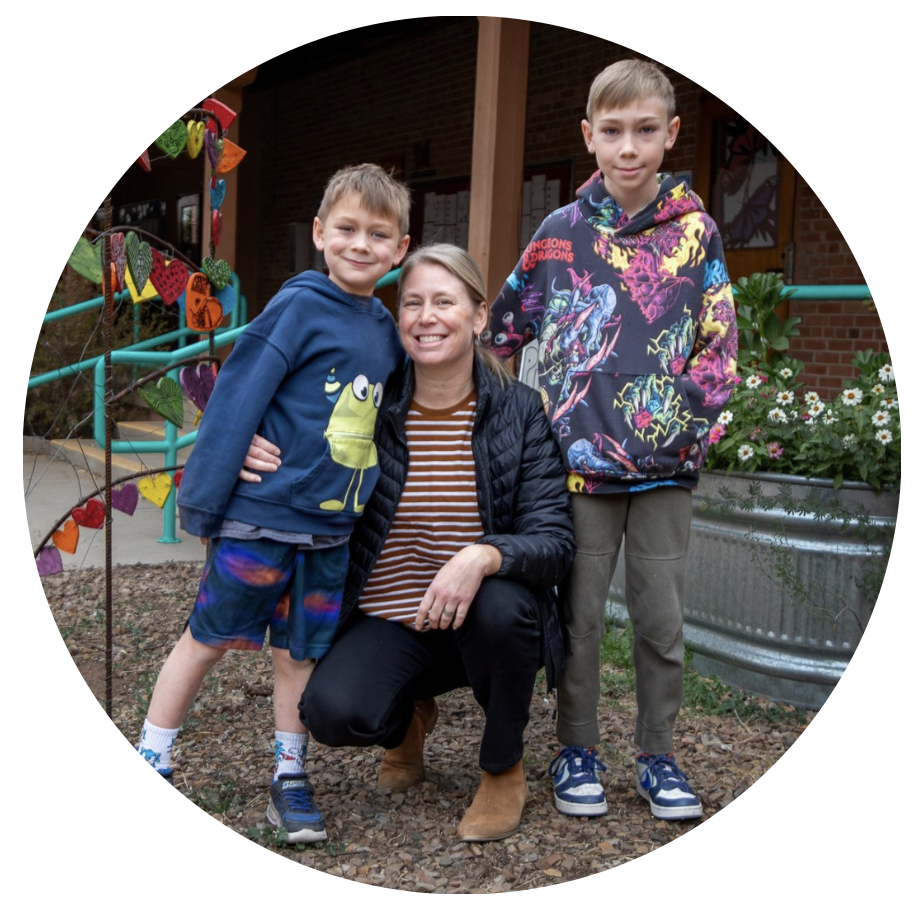
In this Q&A, Sara shares stories of student projects, teacher growth, and the powerful impact of PBL on school culture and community.
What has been the catalyst for PBL at Borton?
Sara Stewart: We’ve been a PBL school since 2011. As a magnet school, we needed innovative curriculum to bring in diversity and equity, and PBL became that anchor. Systems thinking came later. Now, as Magnet Coordinator, I see that families choose us specifically for PBL.
Can you share an example of a project?
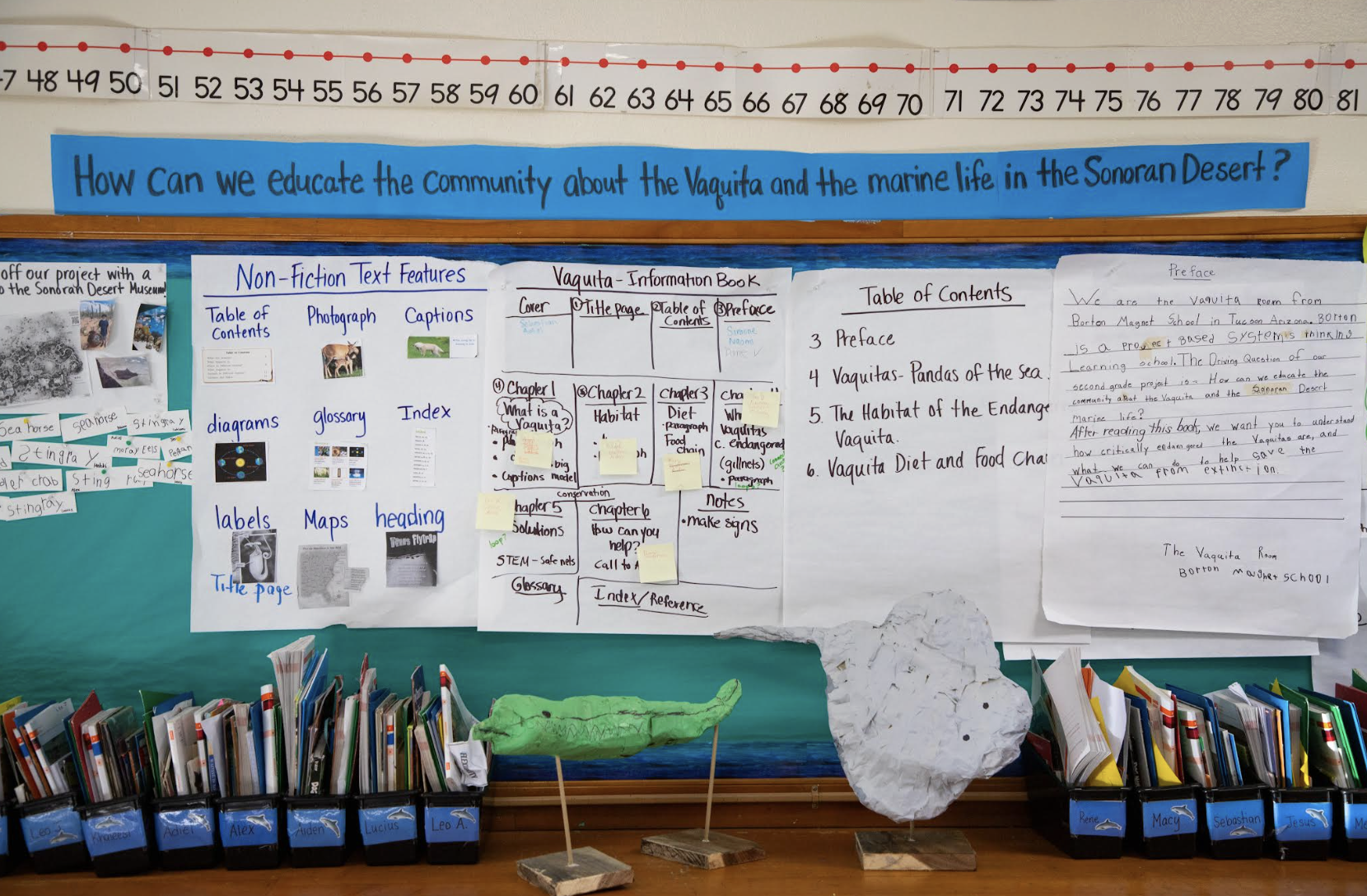
Sara Stewart: Last year, a second-grade class did a project on the Vaquita, an endangered porpoise in the Gulf of Mexico. The students spent the year in inquiry about how to educate the community about the crisis. They brought in an expert, used systems thinking and connection circles, and then shared their work at the Desert Museum, the Festival of Books, and local libraries.
What’s powerful is that a simple invention has recently been reducing gill nets that were harming the vaquitas, and there may now be as many as 15 instead of five. While it wasn’t because of our students’ work directly, it was empowering for them to see persistence and systems thinking in action—that even hopeless-seeming problems can change.
What are some challenges or learning moments students experience in PBL?
Sara Stewart:
Sometimes PBL isn’t just “fun”—it’s “hard fun.” Students struggle with group work, critique and revision, or finding that a solution isn’t as simple as they thought.
For example, our fifth graders wanted to replace disposable silverware with metal, but they had to learn about real-world constraints like dishwashers, staffing, and budgets. They had to pivot and rethink solutions, which was motivating and authentic learning.
What shifts in thinking have you seen, and how do you support them?
Sara Stewart: PBL can mean different things to different people. Some teachers arrive thinking of projects as a collection of activities, but without sustained inquiry. I coach them to reframe using PBLWorks tools like the Tubric, which helps craft strong driving questions and anchor projects in purpose and audience. Just posting that question on a project wall and building “need-to-knows” around it shifts everything.
Veteran teachers love combining PBLWorks’ ready-made units with student-driven inquiry. For instance, one of our fourth-grade teachers ran the Miniature Golf Course project a second year in a row. Not only did students look forward to it, but the teacher used reflection to improve—this time focusing more on formative assessment and team collaboration. We even used a systems thinking stock-flow diagram where students analyzed what increases or decreases collaboration. The kids themselves concluded they needed to make a plan and set rules, which was far more powerful than a teacher directive.
Our staff also leans on resources like K–5 rubrics for collaboration, communication, and presentation, as well as reflection tools and scaffolds. And we use the Butterfly video often—it’s such a concrete way for students to understand critique, revision, and growth mindset in action.
Principal’s Perspective Principal Eric:
PBL is so powerful here. It’s become part of our culture and our community. Families choose Borton because of it, and teachers do, too. We’ve actually seen PBL attract new educators and keep experienced ones engaged, because they believe in the kind of learning that happens here.
What do students say when they leave Borton and move into middle school?
Sara Stewart: Our feeder school is a STEM-focused magnet, not officially PBL, but they do projects. Some families instead choose Wakefield Middle School, which is PBL, because they want to continue in that environment. Families often tell us the projects stick with their children. They carry ideas into middle and high school with a deeper sense of voice, authenticity, and relevance. I’ve heard from families that these projects live on in their students’ hearts long after they leave.
What’s next for Borton on the PBL journey?
Sara Stewart: We want to move away from projects being “a project just to do a project” and continue shifting mindsets so PBL is woven across all instructional strategies. That means teaching math, science, and literacy through projects—not just semester-long showcases, but also shorter, meaningful two-week units.
We’ve had some rebuilding after leadership transitions and COVID, which pushed us toward more traditional approaches. Now we’re back on track, continually striving toward Gold Standard PBL with rich, authentic projects that connect to our community.
Principal Eric:
For us, PBL isn’t just a strategy—it’s who we are. It creates joyful, authentic learning for students and keeps teachers inspired, too. That’s why we believe so strongly in continuing this journey.